
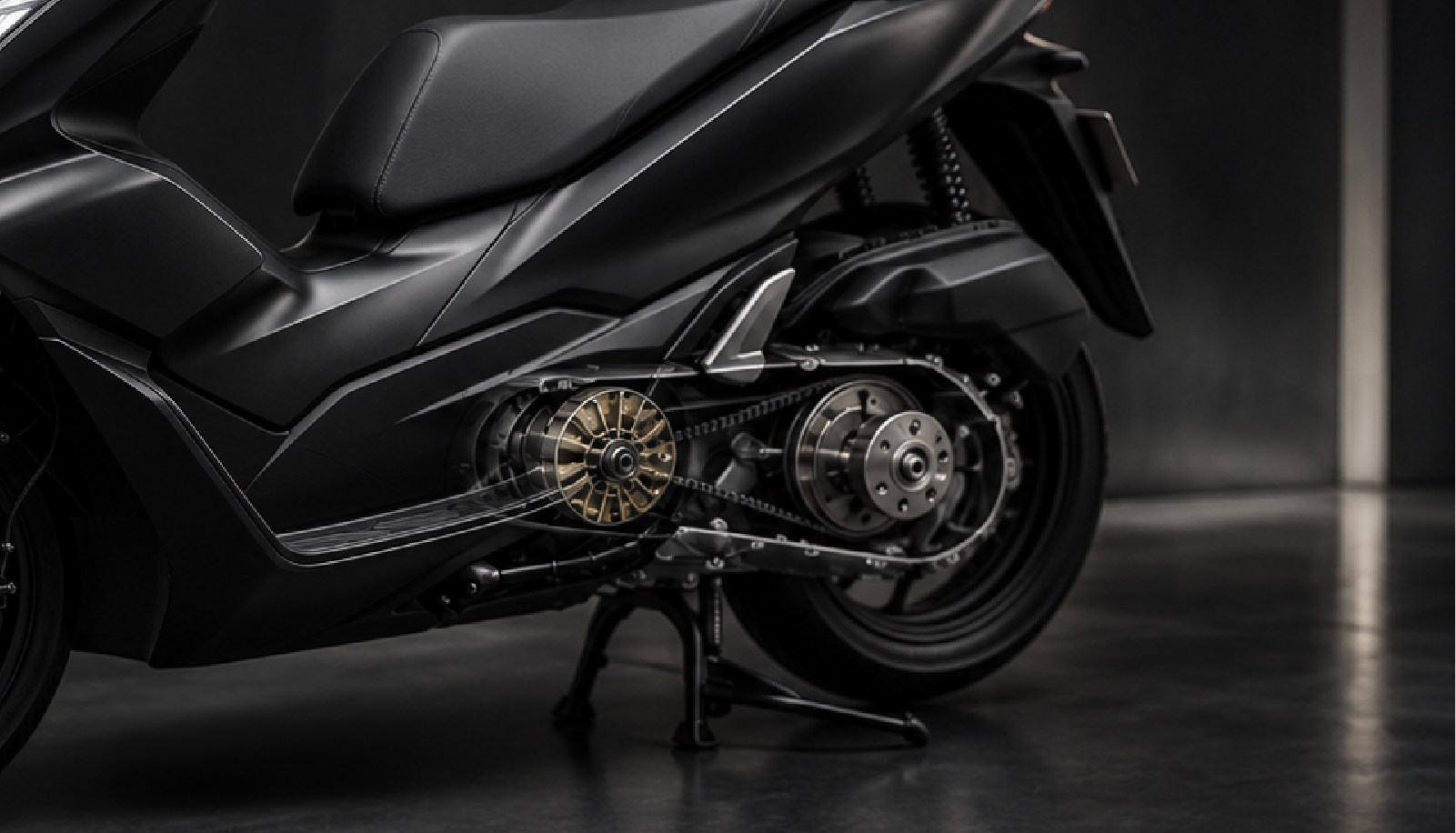
Get to Know Motorcycle CVT, These Are the Key Components Inside
A motorcycle CVT consists of several components that work together as an integrated system. From the weight roller, pulley, V-belt, and piece slider to other supporting components, each part has its own role in supporting the operation of the transmission system. So, what exactly is a motorcycle CVT, and how does it work?
What Is a Motorcycle CVT?
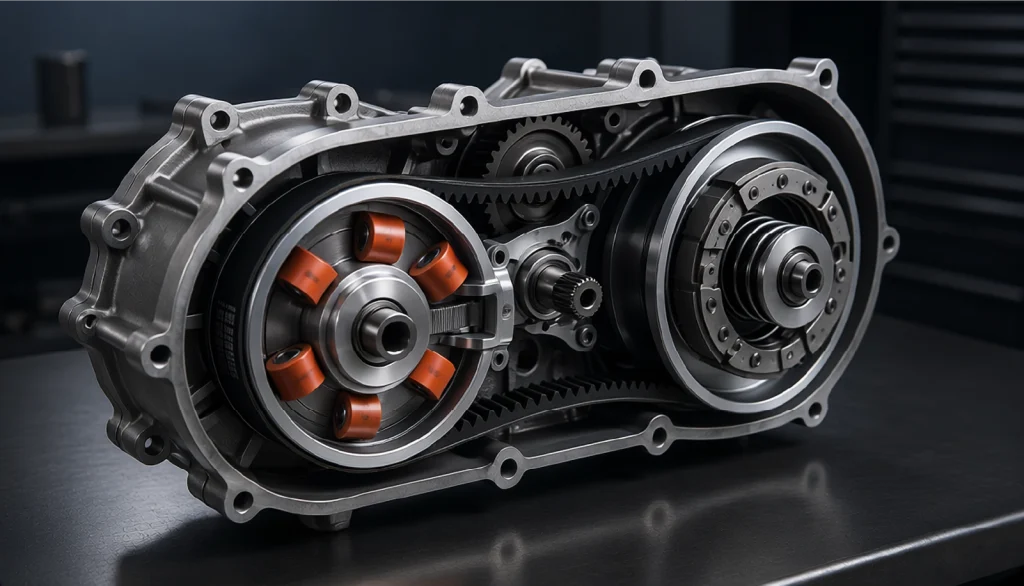
CVT, or Continuously Variable Transmission, is an automatic transmission system that allows the transmission ratio to change continuously without the conventional gear shifts found in manual motorcycles.
The system works by changing the effective diameter of the front and rear pulleys, which are connected by a V-belt. As engine speed changes, the CVT components adjust their positions so that engine power can be transferred to the rear wheel according to riding conditions.
Because the system operates automatically, riders do not need to operate a clutch lever or manually shift gears. This is one of the reasons CVT systems are widely used in automatic motorcycles.
How Does a Motorcycle CVT Work?
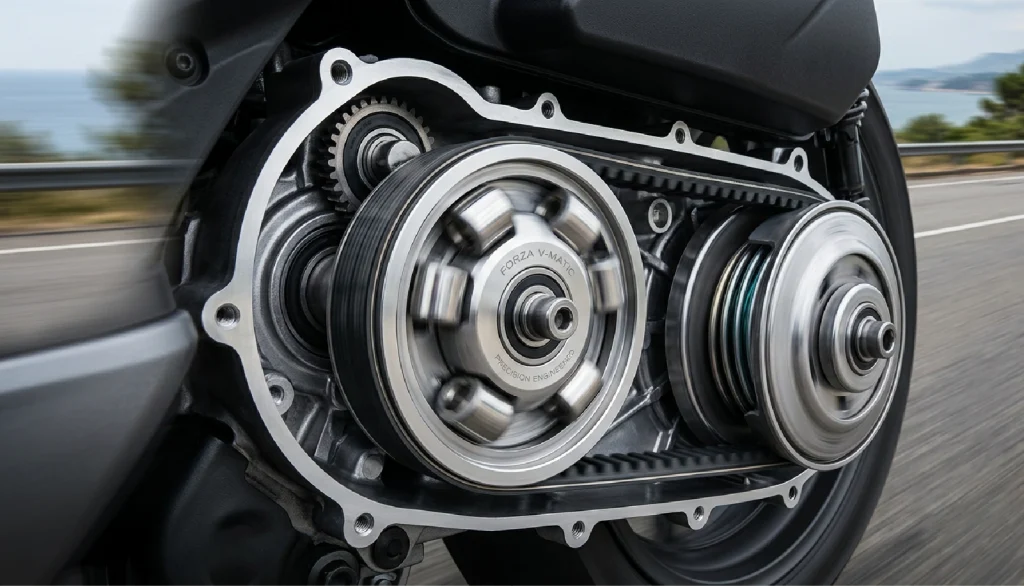
A motorcycle CVT operates through several interconnected components. When the engine is started and engine speed increases, the front pulley begins to operate. The weight rollers inside the roller housing move as a result of centrifugal force.
The movement of the weight rollers pushes the pulley components, changing the effective diameter of the front pulley. At the same time, the rear pulley adjusts its position. This change causes the V-belt to move to a different position, which in turn changes the transmission ratio.
This process occurs automatically and continuously, adjusting to changes in engine speed and the motorcycle’s operating conditions.
Key Motorcycle CVT Components and Their Functions
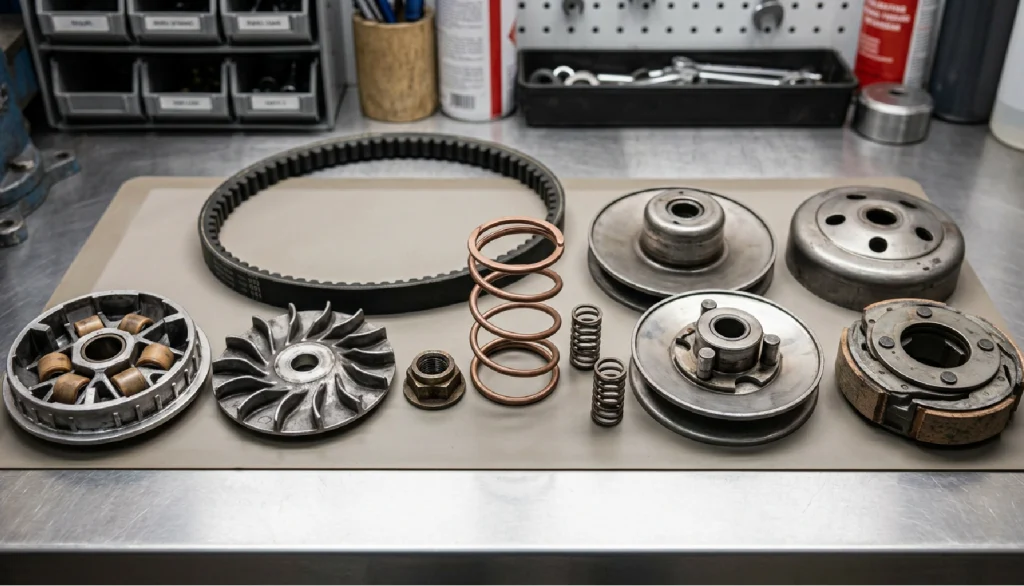
A CVT system does not consist of a single component. Several key parts work together to support the proper operation of the transmission system.
1. Weight Roller
The weight roller is one of the key components located in the front pulley assembly of a CVT. This small cylindrical component helps control pulley movement through centrifugal force as the engine rotates.
The condition and characteristics of the weight rollers can affect how the CVT responds to changes in engine speed. Therefore, the size, weight, material, and quality of the weight roller should be selected according to the vehicle’s specifications and intended application.
2. CVT Pulley
The pulley is an important component that works together with the V-belt to transfer engine power. A CVT system consists of a front pulley and a rear pulley, which adjust their positions to provide different transmission ratios.
Changes in pulley position allow the CVT system to adjust power transmission as the motorcycle accelerates or maintains speed.
3. V-Belt
The V-belt connects the front and rear pulleys. It transfers power from the front section of the CVT system to the rear pulley, allowing engine power to be transmitted toward the rear wheel.
Because the V-belt is continuously exposed to friction and operating loads, its condition needs to be monitored. A worn V-belt can affect the performance of the transmission system.
4. Piece Slider
The piece slider is a small component that works within the pulley assembly and supports the movement of the pulley components.
Although relatively small in size, the piece slider plays a role in supporting the pulley mechanism. A worn piece slider can affect CVT operation, which is why its condition should be checked periodically.
5. Clutch Shoes
Clutch shoes are components involved in the transfer of engine power to the rear wheel. They operate based on rotational speed to engage the engine’s power with the rear-wheel drive system.
The condition of the clutch shoes should also be monitored, as wear can affect the motorcycle’s response when starting from a stop.
Why Is the Quality of CVT Spare Parts Important?
Spare parts quality is an important consideration when meeting the needs of the automotive industry. Consistent products can help businesses maintain component availability while meeting market requirements.
Several factors should be considered when selecting spare parts, including:
- Material Quality
Ensuring that the component is made from materials suitable for its intended application. - Product Precision
The dimensions and shape of components should be manufactured consistently to support proper application. - Production Consistency
Stable quality across products is an important consideration for businesses requiring components in specific quantities. - Quality Inspection
Inspection processes help ensure that products meet established quality standards. - Application Suitability
Components should be selected according to the vehicle type and intended application.
By considering these factors, businesses can make more appropriate spare parts selections based on their specific requirements and the needs of the automotive industry.
Each component has a different function, but all of them contribute to the overall operation of the CVT system. Therefore, regular inspection and the use of suitable, quality CVT spare parts are important considerations.
For the automotive industry, component quality and production consistency are also important factors in supporting manufacturing and aftermarket requirements. PT. Sejati Jaya Tangerang is an automotive spare parts manufacturer focused on various components, including CVT spare parts.