
Don’t Get It Wrong: Know the Main Parts of an Automatic Motorcycle
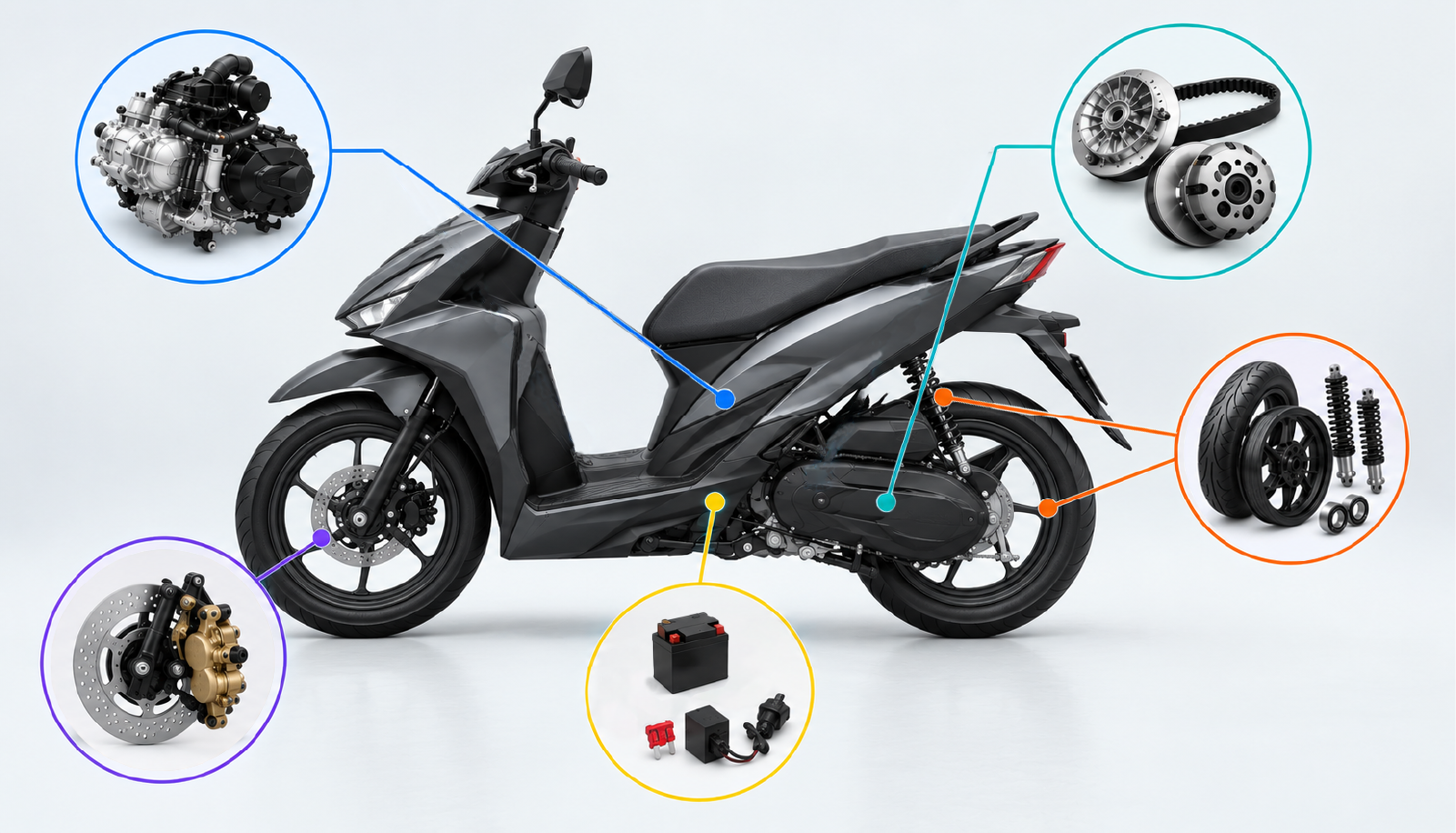
Automatic motorcycles consist of various parts and components that work together to support the vehicle’s operation. Each part has a different function, from the engine as the source of power, the CVT system for transferring power, and the braking system for slowing the vehicle down, to the wheels, suspension, and electrical system that support other vehicle functions.
In this article, we will take a simple look at the main parts of an automatic motorcycle, not only the CVT components, but also other important parts of the vehicle. By understanding their basic functions, users can more easily identify components and select the right spare parts when their motorcycle is serviced.
Why Is It Important to Know the Parts of an Automatic Motorcycle?
Understanding the various parts of an automatic motorcycle can help users become more familiar with the components found on their vehicles. Knowing the names and types of these parts can also make it easier to understand information provided by technicians during servicing or vehicle inspections.
For motorcycle owners, this knowledge can be helpful when looking for the spare parts they need. Meanwhile, for workshops, spare parts stores, and resellers, understanding different components is an important part of providing accurate information to customers.
In addition, each component has a different function and position. Understanding how these parts relate to one another helps users recognize that a vehicle does not rely on a single spare part, but rather on multiple components that work together.
What Automatic Motorcycle Parts Should You Know?
In general, the main parts of an automatic motorcycle can be grouped according to their systems and functions. Here are five main groups of automatic motorcycle parts that are commonly looked for at workshops:
1. CVT Components
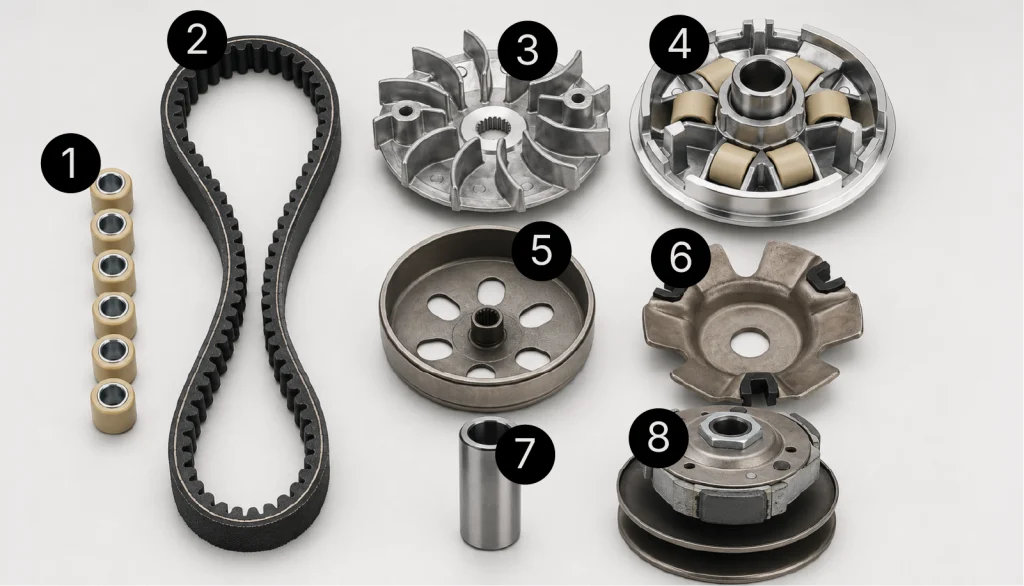
Some of the components that can be identified include:
1. Roller (Weight Roller)
A cylindrical component that uses centrifugal force to push the movable drive face. The roller’s weight can influence the characteristics of initial acceleration and top speed.
2. V-Belt
A specially designed rubber belt that transfers rotational power from the front (primary) pulley to the rear (secondary) pulley.
3. Front Pulley Fan (Fixed Drive Face)
The stationary side of the primary pulley. It features fins that help circulate air around the CVT area to support cooling and help prevent excessive heat buildup around the V-belt.
4. Roller Housing (Movable Drive Face / Variator)
The movable side of the primary pulley. It moves inward and outward and serves as the housing and movement path for the weight rollers.
5. Clutch Bell
The housing that surrounds the clutch shoes and is connected to the final drive gear shaft. At a certain engine speed, the clutch shoes engage with the inner surface of the clutch bell, allowing power to be transferred to the rear wheel.
6. Ramp Plate
The plate located behind the roller housing that helps keep the weight rollers within their designated tracks. It is also equipped with piece sliders, which help support smooth and stable movement of the roller housing.
7. Bushing (Drive Face Boss)
A cylindrical metal sleeve that serves as an axis and sliding surface for the inward and outward movement of the roller housing.
8. Rear Pulley & Clutch (Driven Pulley & Centrifugal Clutch)
An assembly consisting of the centrifugal clutch, which engages at a certain RPM, and the driven pulley, whose movable section adjusts in response to the movement of the V-belt from the front pulley.
Each of these parts has its own role, so their condition should be considered during CVT inspections and servicing.
2. Engine Components
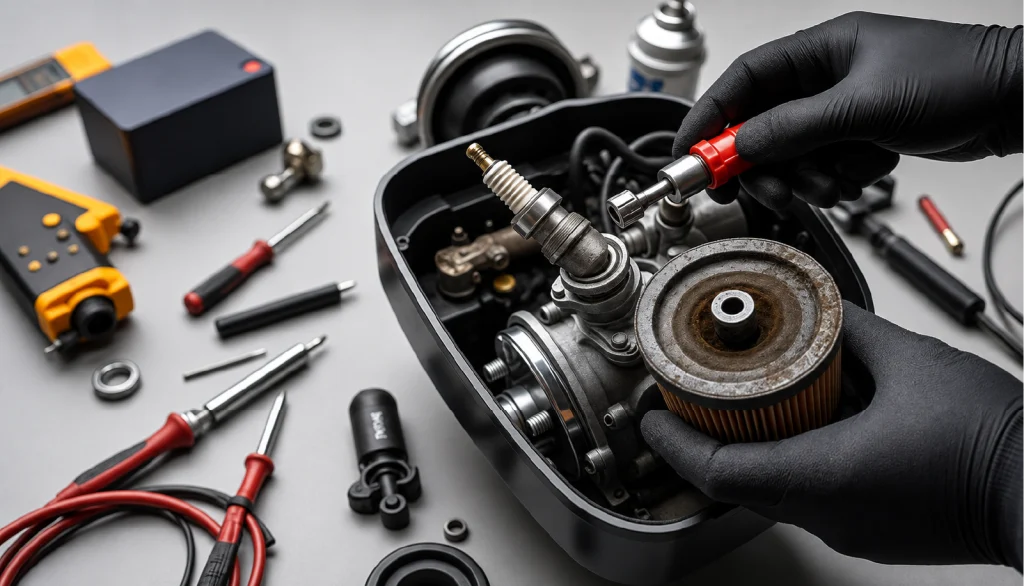
The engine is the primary source of power that drives the vehicle. It contains various components that work together to support the combustion process and engine operation.
Commonly recognized parts include the spark plug and air filter. The spark plug is involved in the ignition process, while the air filter helps filter the air entering the engine system. There are also many other components that support engine operation.
3. Braking System Components
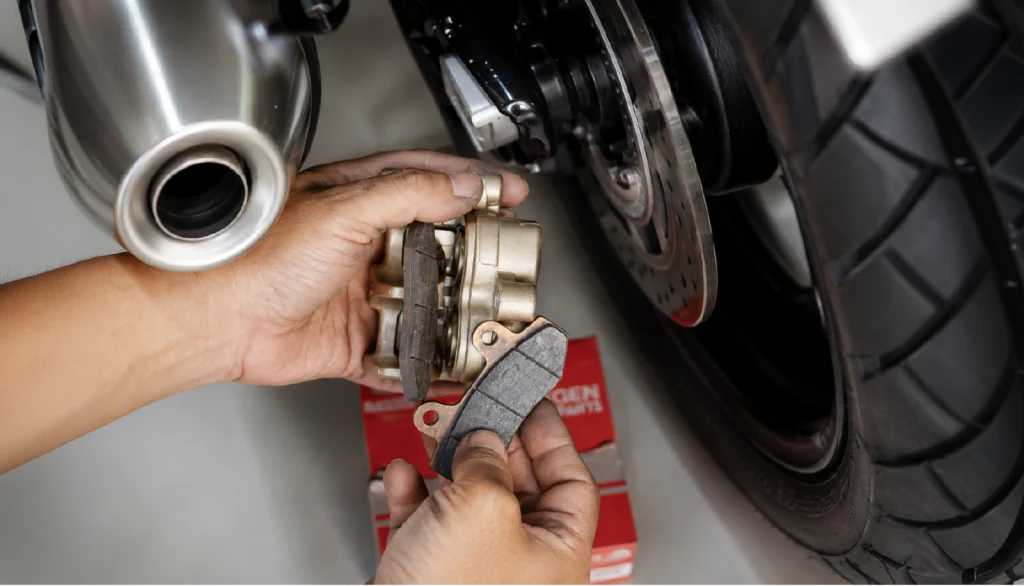
The braking system is directly related to the vehicle’s ability to reduce speed or come to a stop. Because of its important role in vehicle operation, this system also requires proper attention and maintenance.
Common components include brake pads, brake discs, and other supporting parts. The condition of braking components should be inspected according to the vehicle’s condition and maintenance requirements.
4. Wheel and Suspension Components
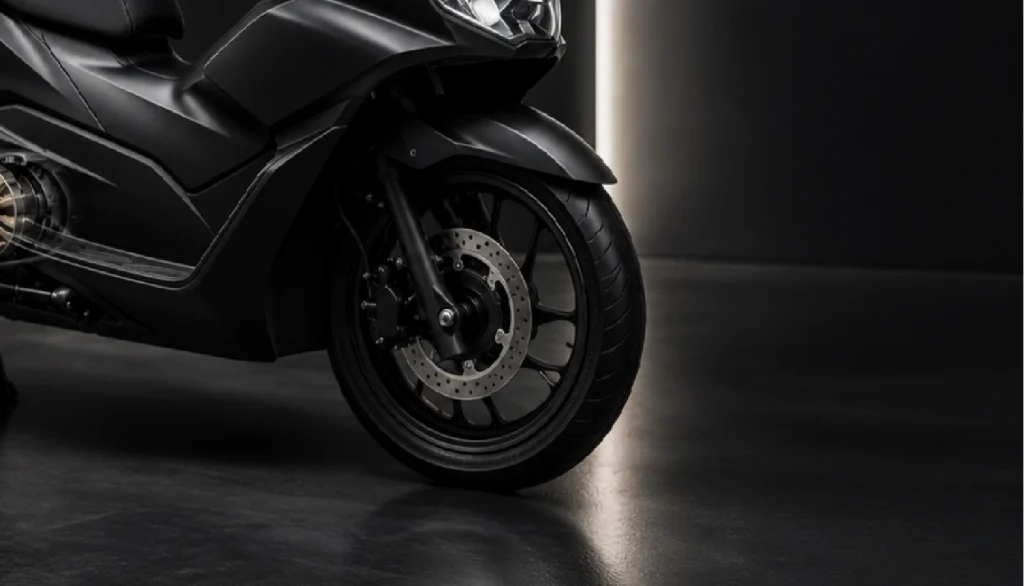
The wheels and suspension are directly related to vehicle movement and riding comfort. These components include tires, wheels/rims, wheel bearings, and various suspension-related parts.
Inspecting these components is important to ensure that the parts associated with the wheels and suspension are in an appropriate condition.
5. Electrical Components
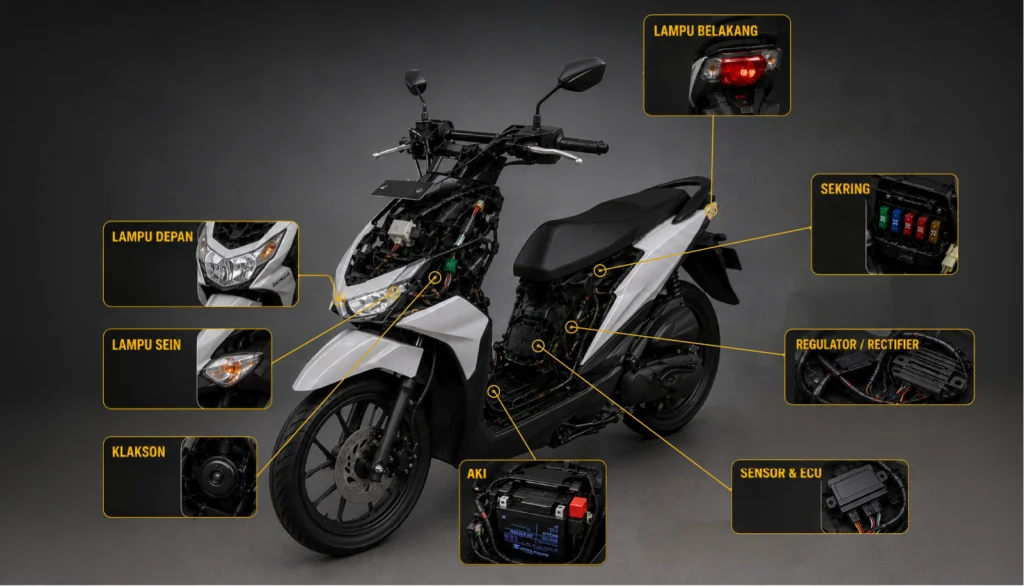
In addition to mechanical components, automatic motorcycles also have an electrical system that supports various vehicle functions. Examples include the battery, lights, fuses, and other electrical components.
Each component has a different function. The battery supplies electrical power, lights support visibility and vehicle signaling, while fuses provide protection within the electrical circuit.
Automatic Motorcycle Parts to Know During Servicing
When an automatic motorcycle undergoes servicing, technicians may inspect various areas depending on the vehicle’s condition. The inspection may cover the CVT, engine, braking system, electrical system, wheels, and suspension.
However, this does not mean that every component needs to be replaced every time the motorcycle is serviced. Spare parts should generally be replaced based on the component’s condition, the vehicle’s requirements, inspection results, and the technician’s recommendations.
By understanding the names and basic functions of different parts, vehicle owners can also follow the inspection process more easily and better understand which components may require attention.
Don’t Choose Automatic Motorcycle Spare Parts Randomly
Choosing spare parts for an automatic motorcycle requires attention to several factors to ensure that the selected components are suitable for the vehicle. Therefore, don’t base your decision solely on price or product appearance.
Here are several things to consider:
- Match the Vehicle Type
Make sure the spare part is compatible with the vehicle type and specifications so that it can be used appropriately. - Check the Product Specifications
Pay attention to the size, type, material, and other information provided for the product before purchasing. - Check the Condition of the Spare Part
Make sure the component is free from damage, defects, or other conditions that could affect its use. - Consider Product Quality
Choose spare parts with good quality and clear specifications to support proper vehicle operation. - Match the Intended Application
Make your selection based on the vehicle’s condition and intended use, rather than price alone. - Pay Attention to Installation
Proper installation is important to ensure that the component can function as intended. If you are unsure about spare part compatibility, consult a qualified technician or workshop.
Understanding the names and basic functions of different motorcycle components can help users better understand their vehicle’s maintenance needs and make more informed decisions when looking for spare parts.
Spare part selection should also take into account vehicle compatibility, product condition, specifications, and proper installation.
PT. Sejati Jaya Tangerang is a manufacturing company producing various automotive spare parts and components to support the needs of the automotive industry.
Already familiar with the main parts of an automatic motorcycle? Explore PT. Sejati Jaya Tangerang’s spare parts products to support your automotive needs.