
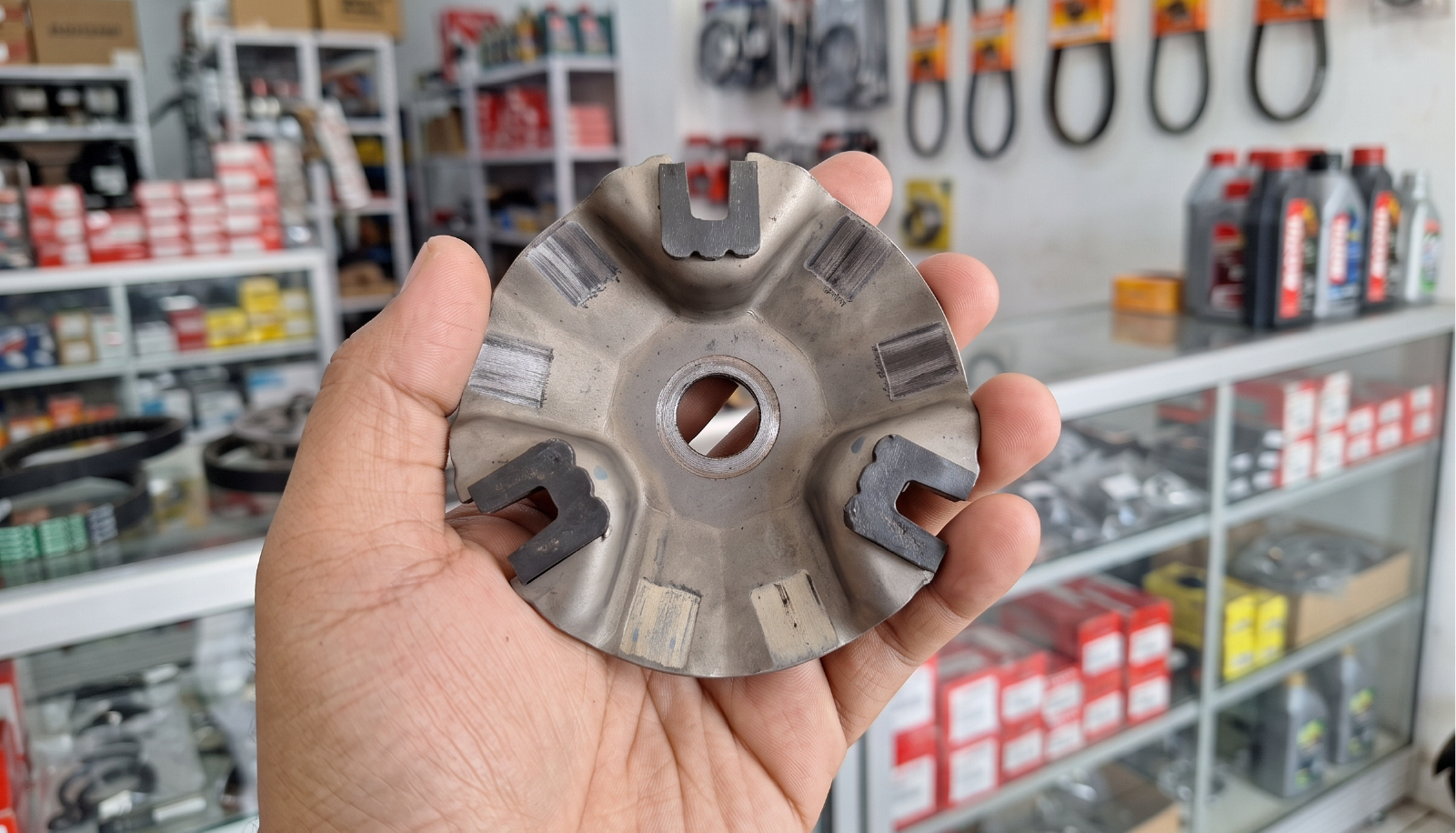
Don’t Let Your Piece Slider Wear Out: Risks and How to Address Them
The CVT system in an automatic motorcycle consists of several components, including the Piece Slider, which supports the movement of the CVT pulley mechanism. This component is typically made from plastic or a specialized resin designed to withstand friction and heat. Over time, the Piece Slider can experience wear, which may be accompanied by unusual sounds, vibrations, or changes in the motorcycle’s acceleration response.
Recognize the Signs of a Worn or Damaged Piece Slider in a CVT
Wear on the Piece Slider can lead to changes in CVT operation. Here are some signs that may indicate the Piece Slider needs to be inspected:
1. Unusual Sounds Come from the CVT Area
Sounds that differ from the motorcycle’s normal operating condition may be one indication that a CVT component needs to be inspected. For example, you may hear noises, rough sounds, or sounds such as rattling or knocking from the CVT area, particularly when the motorcycle starts moving or during acceleration.
If these sounds occur repeatedly, the Piece Slider can be included in the inspection. However, sounds from the CVT area can also originate from other components, so they cannot automatically be considered a sign of a worn Piece Slider.
2. Vibrations Appear When the Motorcycle Starts Moving
A worn Piece Slider may be associated with changes in the movement of the pulley mechanism. One condition that riders may notice is vibration when the motorcycle starts moving or when the throttle is opened for acceleration.
For example, the motorcycle may feel more noticeable vibration than usual when starting to move. This condition still requires further inspection because vibrations can also be related to other CVT components.
3. The Motorcycle Feels Less Smooth During Acceleration
Changes in CVT operation can make the motorcycle’s response feel different. One example is acceleration that feels less smooth, jerky, or less responsive than usual during operation.
If these changes occur together with sounds or vibrations from the CVT area, the Piece Slider and other related components can be inspected to help determine the cause.
4. The Piece Slider Shows Changes in Shape
Signs of wear can also be identified through a physical inspection. A Piece Slider exposed to friction and continued use over time may show surface wear, uneven wear, or changes in its original shape.
For example, a surface that should normally be even may begin to show friction marks or appear different from its normal condition.
5. Changes Are Found in the Surrounding CVT Components
The Piece Slider works together with other components within the CVT mechanism. Therefore, during an inspection, the condition of the roller housing, pulley, and other related CVT components should also be checked.
If signs of friction, wear, or other changes are found in the surrounding components, further inspection is necessary to determine which parts require attention.
What Are the Risks of Leaving a Worn Piece Slider Unchecked?
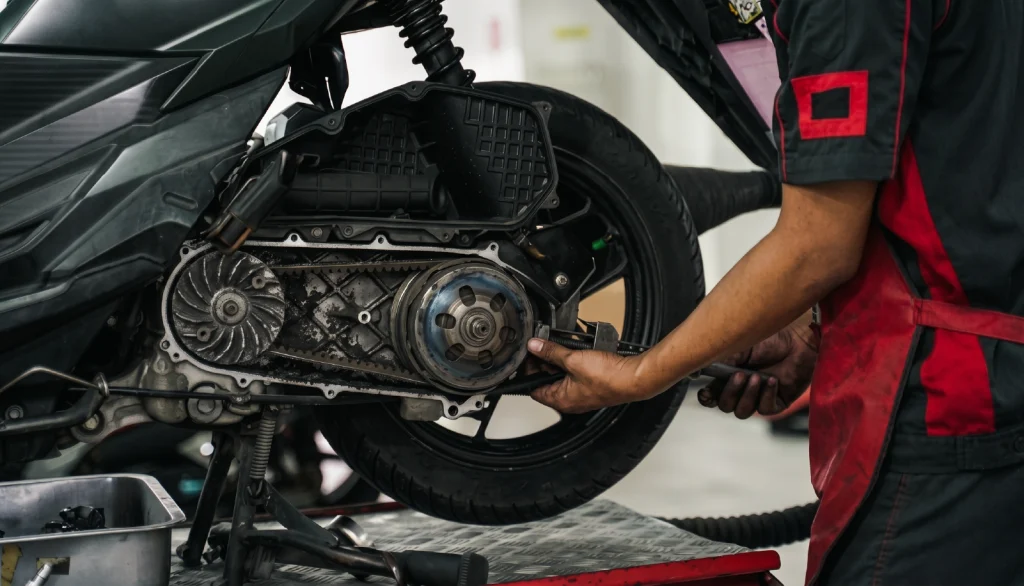
The Piece Slider works as part of a mechanism involving several other CVT components. If it has already experienced wear but is not inspected, the operation of the mechanism may become less effective.
Changes such as unusual sounds, vibrations, or differences in acceleration response may continue to be noticeable. Related CVT components should also be inspected to determine whether other parts have experienced wear or changes in condition.
What Causes a Piece Slider to Wear Out More Quickly?
Wear on a Piece Slider can be associated with several factors. It is not necessarily caused by a single factor, so the overall condition of the CVT system should also be considered.
Factors that may contribute to wear include:
- Continued vehicle use over time.
- Repeated movement and friction while the CVT is operating.
- The condition of other CVT components.
- Insufficient attention to CVT maintenance.
- Installation conditions that may need to be checked.
Because each vehicle has different usage conditions, it is not appropriate to determine a general service life for a Piece Slider without supporting data. Inspecting its physical condition is one way to determine whether the component remains suitable for use.
How to Address a Worn Piece Slider
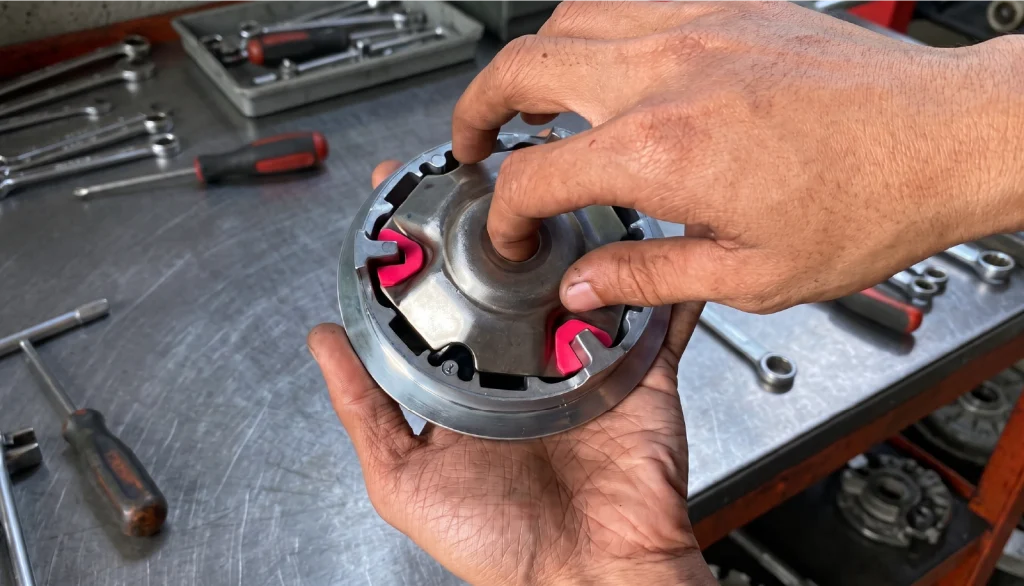
If an inspection indicates that the Piece Slider has experienced wear, several steps can be taken.
1. Inspect the CVT System
Inspect the Piece Slider and other CVT components to better understand their condition and identify the potential source of the issue.
2. Check the Surrounding Components
Do not focus only on the Piece Slider. The Weight Roller, pulley, and other CVT components should also be inspected because they work together within the system.
3. Replace It If It Is Worn or Damaged
If the Piece Slider is no longer suitable for use, replace it with a spare part that matches the vehicle’s type and specifications.
4. Make Sure It Is Installed Correctly
The component should be installed according to the correct position and CVT mechanism. Replacement should ideally be carried out by a mechanic or technician who is experienced in working with CVT systems.
If wear is found, replacement of the Piece Slider can be considered based on the inspection results. Using a suitable spare part and ensuring proper installation can help maintain the CVT mechanism’s intended operation.