
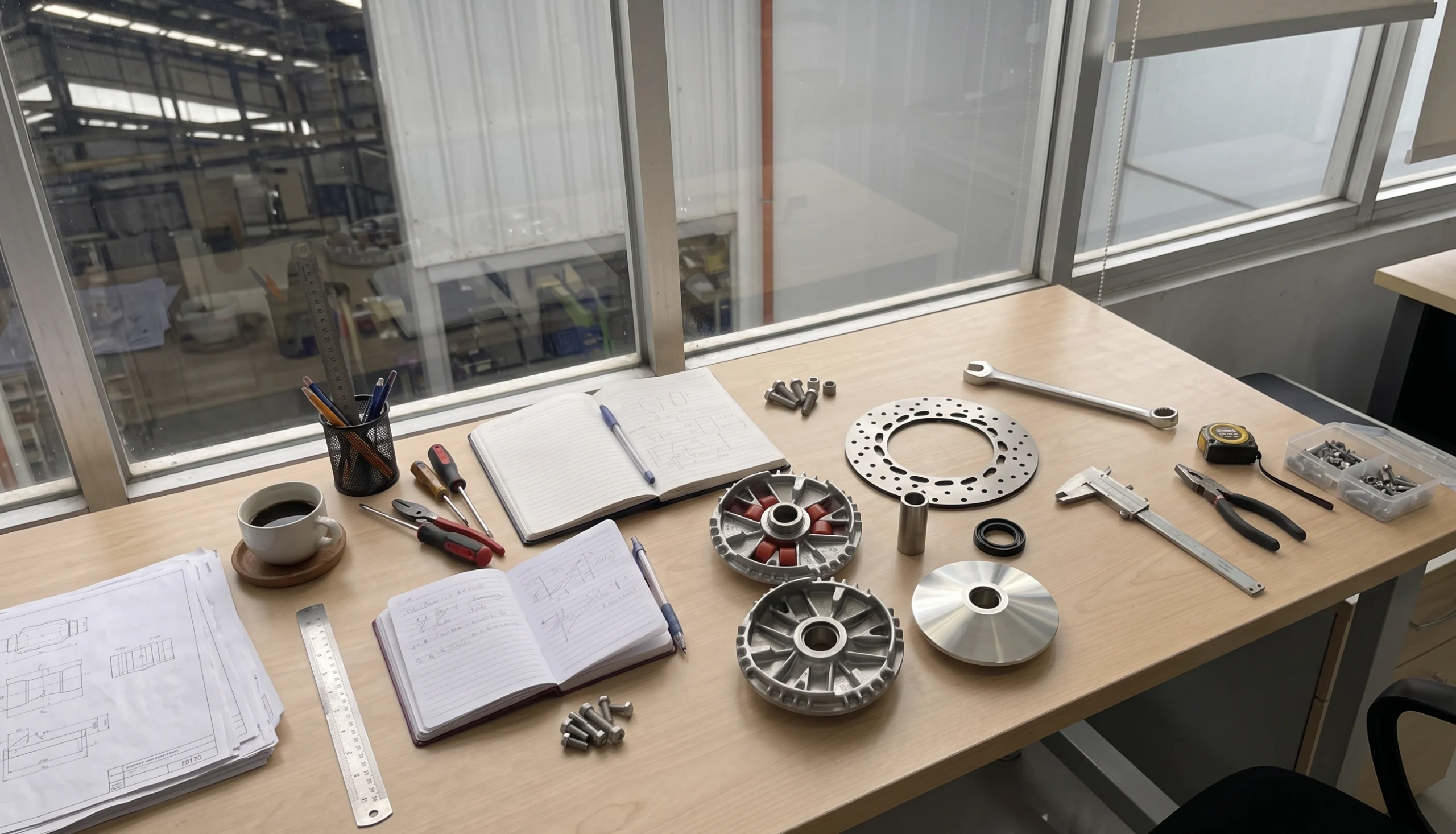
Stages of Automotive Component Development from Concept to Product
An automotive component does not go directly into production once an idea has been established. Before becoming a finished product, it must go through several stages to translate the initial requirements into a component that meets its intended purpose.
Automotive component development may involve product developers, engineers, and manufacturing teams. Each party plays a role in reviewing the design, making adjustments, and evaluating the development results before the component proceeds to production.
From Concept to Automotive Component
Component development begins with understanding the product requirements. This provides the foundation for determining the function, shape, and characteristics of the component to be developed. Based on these requirements, the initial concept can be refined into a more structured design.
During the early stages, several aspects may need to be considered:
- The intended function.
- The component’s intended application.
- The planned product shape.
- Design suitability for the intended requirements.
- Manufacturing process considerations.
Stages of Automotive Component Development
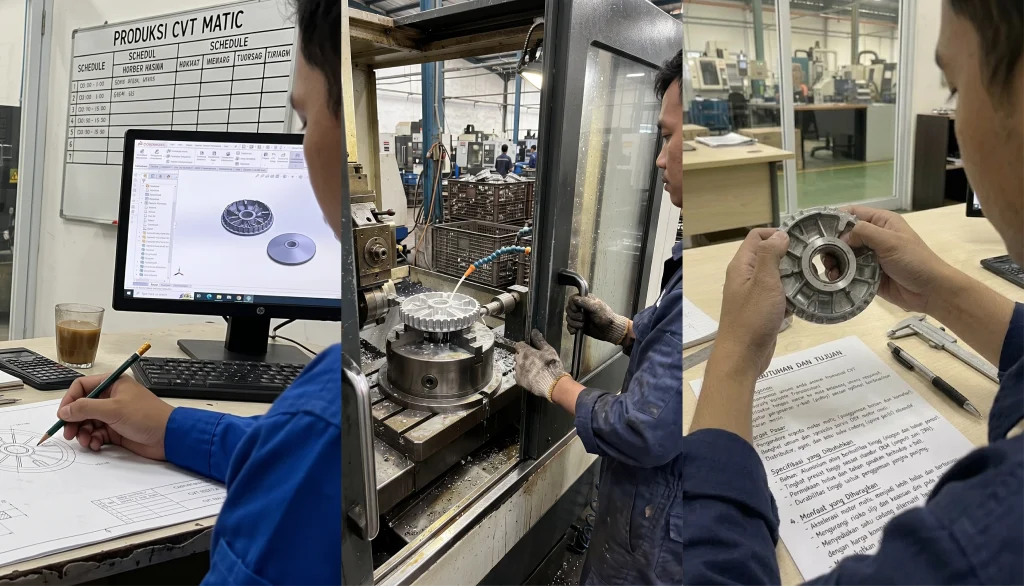
1. Defining Product Requirements
The first stage is to understand the requirements of the component being developed. Information about its function and intended application provides the basis for determining the direction of development.
Clearly defined requirements help the team identify the product characteristics that need to be considered from the beginning.
2. Developing the Concept and Design
Once the requirements have been established, the concept is translated into a component design. The product’s shape and structure are considered to ensure they align with its intended function.
At this stage, the design needs to be reviewed comprehensively because it can serve as the basis for subsequent development activities.
3. Product Development and Adjustments
Not every product requirement can be met using the same design. In certain cases, component customization may be necessary to adapt the product to the user’s requirements or development objectives.
Adjustments may involve:
- Component shape.
- Product design.
- Intended application.
- Findings from evaluations of previous designs.
This process helps refine the product so that it better meets the established requirements.
4. Initial Production and Inspection
The developed design needs to be translated into an initial product to evaluate whether the result matches the original concept.
Initial inspections may cover physical condition, shape, and conformity with the design. The findings can then be used to determine whether the product meets the requirements or needs further adjustments.
5. Evaluation and Refinement
The next stage involves evaluating the development results. If any aspects do not meet the requirements, the design or product can be reviewed to determine what adjustments are necessary.
Evaluation supports a step-by-step development process until the results better meet the product requirements.
Key Considerations in Product Development
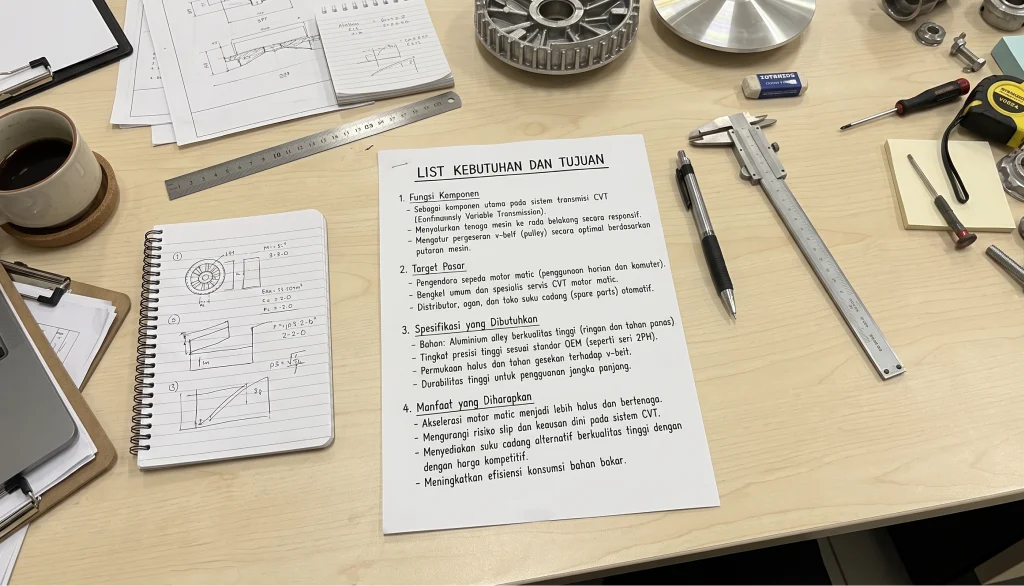
Several important aspects of automotive component development include:
- Product requirements: Provide the foundation for determining the direction of development.
- Design suitability: The design should take the component’s intended function into account.
- Process consistency: Each stage should be carried out in a structured manner.
- Evaluation: Development results should be reviewed before proceeding to the next stage.
- Communication: Coordination between product developers, engineers, and manufacturing teams helps reduce misunderstandings.
- Customization: Adjustments should take product requirements and manufacturing processes into consideration.
Product Development and Manufacturing Requirements
Product development does not end when the design is completed. The development results must also be evaluated in terms of their application in the manufacturing process.
The overall process can be summarized as follows:
Concept → Design → Development → Evaluation → Refinement → Production
The connection between product development and manufacturing helps ensure that a design is not only conceptually appropriate but also suitable for consideration in the product manufacturing process.
For product developers, engineers, and manufacturing professionals, understanding these stages helps clarify the relationship between product concepts and manufacturing requirements. A structured process allows component development to account for functionality, design, evaluation, and customization needs.