
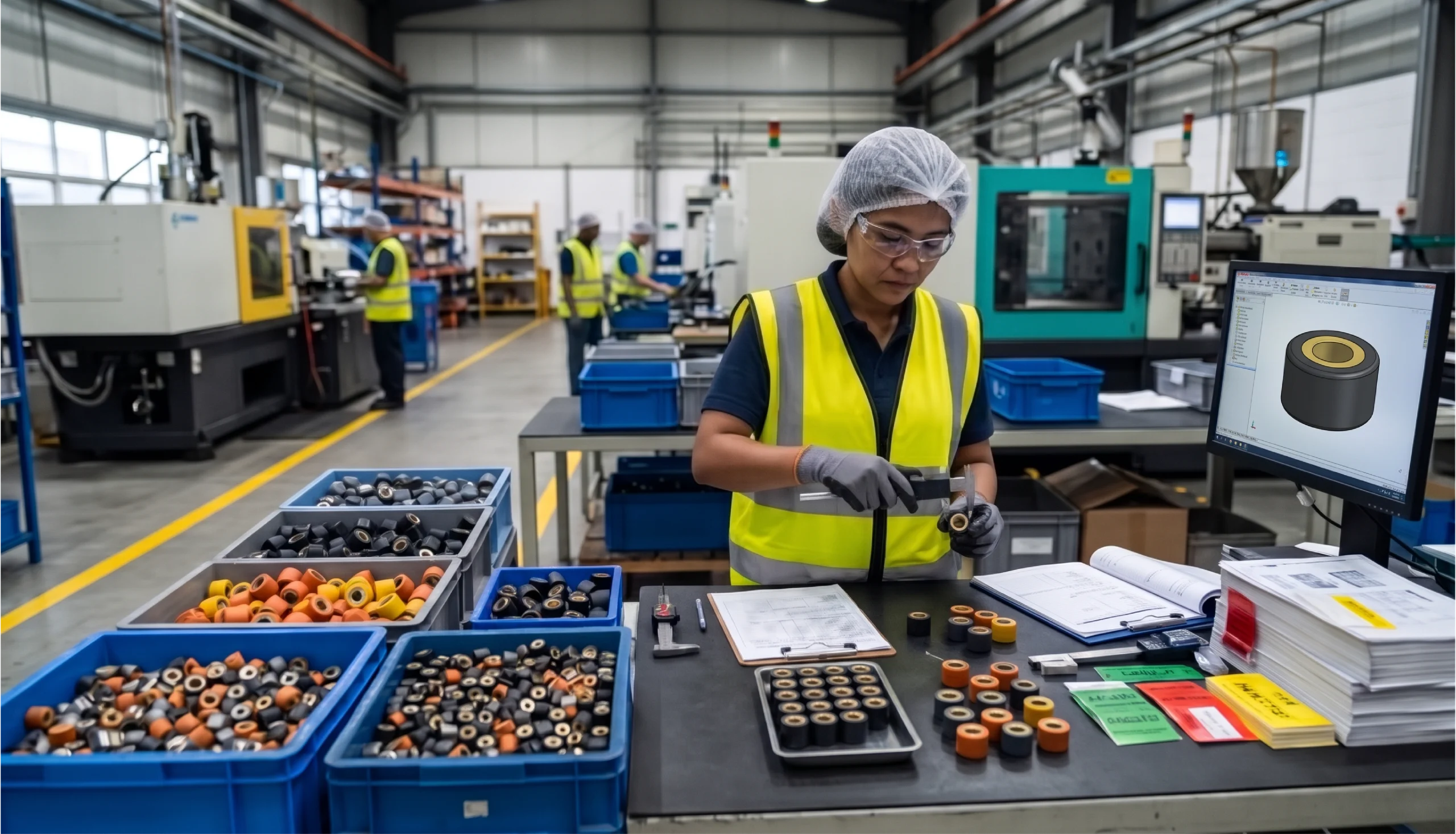
Quality Control in Plastic and Metal Component Production
In manufacturing, product quality needs to be considered from the production stage, particularly for components made of plastic and metal. Production quality control helps monitor product conditions and identify nonconformities before products proceed to the next stage.
What Is Production Quality Control?
Production quality control is the process of monitoring and inspecting production outputs to ensure they meet established requirements. Inspections are not limited to finished products; they can also be carried out during the production process.
Several aspects that require attention include:
- The physical condition of the product.
- The shape and appearance of components.
- Consistency across production outputs.
- Potential nonconformities.
- Product condition after the production process is complete.
By implementing quality control at different stages, potential nonconformities can be identified earlier and addressed as needed.
The Importance of Quality Control in Manufacturing
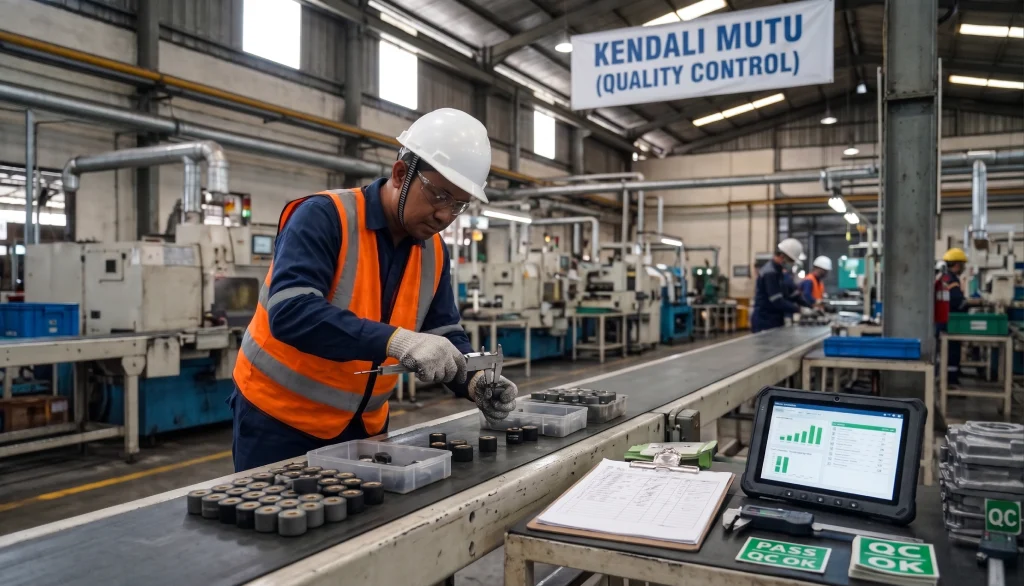
Quality control helps ensure that production processes remain monitored. In the manufacturing industry, consistent inspections provide information about product conditions and the processes currently underway.
Some of the benefits include:
- Helping maintain consistency in production outputs.
- Identifying nonconformities at an early stage.
- Reducing the likelihood of products failing to meet requirements.
- Supporting production evaluation.
- Supporting customer requirements and business processes.
However, quality control does not automatically guarantee that every product will be free from potential nonconformities. Inspections still need to be conducted according to the characteristics of the product and the processes involved.
Quality Control for Plastic Components
For plastic components, the physical condition and appearance of products are among the aspects considered during inspection. Production outputs need to be examined to identify any changes in shape or visual conditions that do not meet requirements.
Some aspects to consider include:
- Component shape.
- Surface appearance.
- Consistency of production outputs.
- Visible visual defects.
- Product condition after manufacturing.
These inspections help ensure that component conditions are monitored before the products proceed to subsequent stages.
Quality Control for Metal Components
Metal components also require attention to their physical condition and manufacturing results. Inspections may cover component shape, dimensions according to process requirements, and surface condition.
Aspects to consider include:
- Shape and physical condition.
- Dimensions according to process requirements.
- Surface condition.
- Potential damage or nonconformities.
- Consistency of production outputs.
Each component type may have different inspection requirements. Therefore, quality control procedures need to be adapted to the characteristics of the product.
General Stages of Production Quality Control
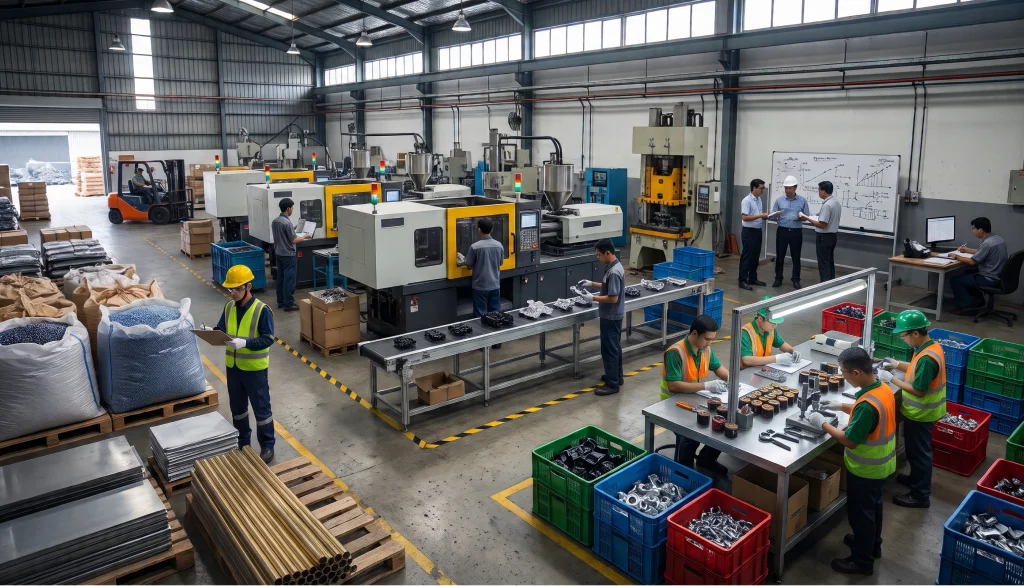
In general, quality control for plastic and metal component production can involve several stages:
- Inspection before production begins.
- Monitoring during the production process.
- Inspection of production outputs.
- Identification of nonconforming products.
- Evaluation and follow-up actions.
- Recording inspection results when necessary.
These stages may vary depending on the product type, production process, and quality management system implemented by each company.
The Roles of QA and QC in Production
Quality Assurance (QA) and Quality Control (QC) have different but complementary focuses in supporting production quality.
Quality Assurance (QA) focuses more on the systems and processes that support the achievement of quality objectives. Meanwhile, Quality Control (QC) is more closely related to the inspection and control of production outputs.
Together, they help companies gain a clearer understanding of both process and product conditions, allowing evaluations to be based on inspection results.