

How Contract Manufacturing Works for Businesses
Production requirements are an important consideration for businesses looking to develop and offer their own products. Not every company has its own manufacturing facilities or handles every stage of production in-house. In such situations, working with a manufacturing partner can be an alternative worth considering.
One commonly used manufacturing arrangement is contract manufacturing. This model allows brand owners or companies to work with a manufacturer to produce products according to their needs and the terms agreed upon by both parties.
What Is Contract Manufacturing?
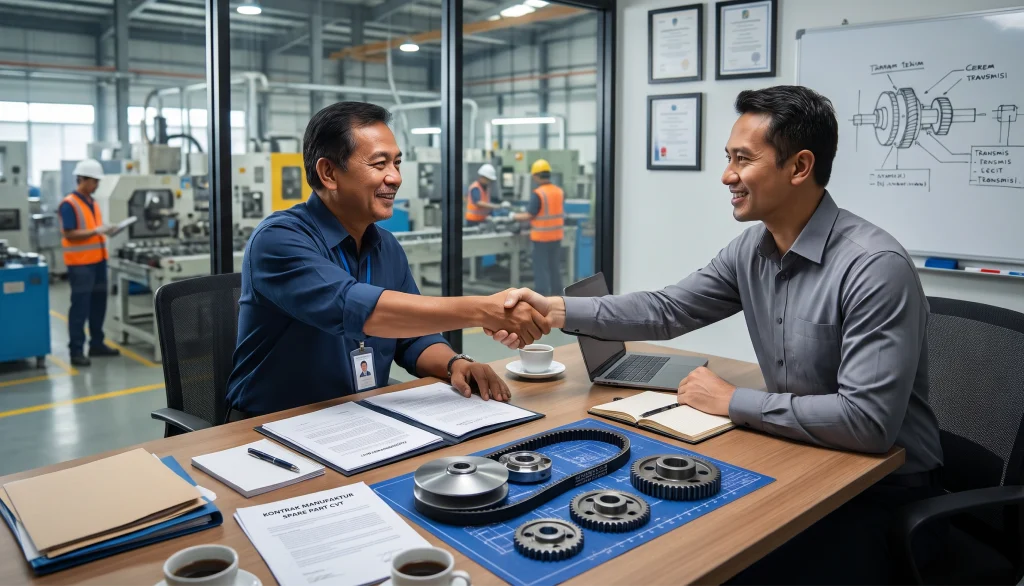
Contract manufacturing is a business arrangement in which a company or brand owner works with a manufacturer to produce a product based on agreed-upon requirements.
Under this arrangement, the brand owner communicates the product requirements, while the manufacturer handles the production process within the agreed scope of work. This division of responsibilities allows each party to carry out its role accordingly.
In simple terms, contract manufacturing connects business needs with production processes. This model can be suitable for companies that require manufacturing support without having to manage every stage of production themselves.
How Does Contract Manufacturing Work?
Contract manufacturing can involve several stages. The process may vary depending on the product requirements and the agreement between both parties.
1. Defining Product Requirements
The process begins by identifying the product to be manufactured and its intended use. The brand owner needs to establish a clear overview of the required product, including its characteristics and purpose.
Clearly defined requirements at this stage can help make discussions with potential manufacturing partners more focused and productive.
2. Discussing Requirements with the Manufacturing Partner
Once the product requirements have been established, the company can discuss them with the manufacturer. These discussions may cover product specifications, the terms of cooperation, and other matters related to production.
Clear communication is essential to ensure that both parties share the same understanding before proceeding to the next stage.
3. Production Preparation
The product requirements are then translated into an appropriate manufacturing process. At this stage, all aspects related to production are prepared according to the agreed requirements and scope of cooperation.
4. Production Process
The manufacturer carries out production within the agreed scope of work. The process is tailored to the product’s characteristics and the manufacturing requirements discussed earlier.
5. Inspection and Quality Control
Inspection is an important part of monitoring the condition of manufactured products. Quality control helps identify any nonconformities that may need to be addressed before the products proceed to the next stage.
6. Products Ready for Use or Distribution
Once production and inspection are complete, the products can proceed to the next stage according to the terms of cooperation. They may be used directly or distributed through the business’s distribution network.
Benefits of Contract Manufacturing for Businesses

Contract manufacturing offers businesses an alternative approach to managing their production requirements. Some potential benefits to consider include:
- Access to support from a manufacturer that handles the production process.
- Allowing brand owners to focus more on other business activities.
- Providing an option for companies that do not manage every stage of production in-house.
- Connecting product requirements with suitable manufacturing processes.
- Creating opportunities for production partnerships tailored to business needs.