

Addressing Specification Nonconformities in Spare Parts Production
In the manufacturing process, production results do not always meet all established requirements right away. Nonconformities may be identified during dimensional inspections, physical condition checks, or other inspections based on product requirements. If not handled properly, these issues can affect production flow and quality control.
Therefore, spare parts that do not meet specifications need to be handled systematically. The roles of QA/QC and production supervisors are important in identifying issues, determining appropriate actions, and preventing similar nonconformities from recurring.
Steps for Handling Spare Parts That Do Not Meet Specifications
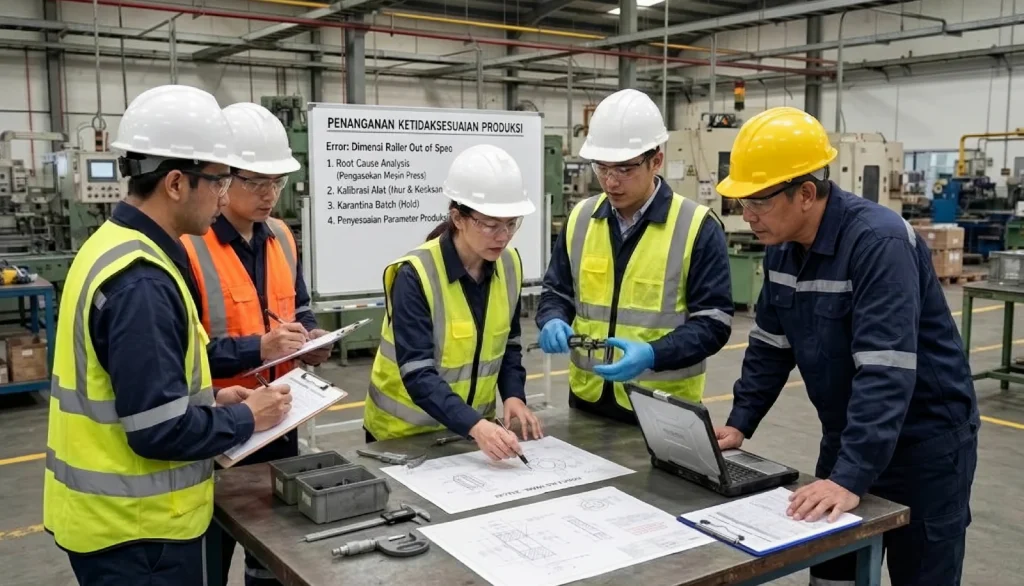
1. Identify and Inspect the Nonconformity
The first step is to determine the type of nonconformity identified. Inspections may cover dimensions, shape, surface condition, or other characteristics specified as product requirements.
The findings need to be compared with the applicable specifications and acceptance criteria. This allows the team to distinguish between products that meet the requirements and those that need further evaluation.
2. Separate Nonconforming Products
Products identified as potentially nonconforming need to be separated and clearly labeled to prevent them from being mixed with products that have met the requirements.
This step helps prevent these products from being used or moved to the next production stage before their status has been determined. Proper control also makes it easier for the production and QA/QC teams to conduct further inspections.
3. Record Findings and Evaluate the Causes
Once a nonconformity has been identified, the team needs to record relevant information, such as the type of issue, the number of affected products, the production stage at which the issue was identified, and the inspection results.
Next, QA/QC and the production supervisor can evaluate the possible causes. The evaluation should be based on evidence and actual conditions rather than assumptions. Identifying the source of the issue helps direct corrective actions toward the processes that require attention.
4. Determine the Appropriate Corrective Action
The appropriate action is determined based on the evaluation results and product requirements. Possible actions include rework, if permitted, process adjustments, or product rejection if the requirements cannot be met.
Decisions must follow established procedures and be made by authorized personnel. A product should not be considered acceptable solely because it looks visually sound if other requirements have not been met.
5. Conduct a Reinspection
After corrective actions have been taken, the product needs to be inspected again based on the relevant acceptance criteria. This inspection aims to confirm that the nonconformity has been addressed and that the result meets the requirements before the product is approved to proceed.
The inspection results also serve as input for evaluating whether the corrective actions have been effective.
How to Prevent Nonconformities from Recurring
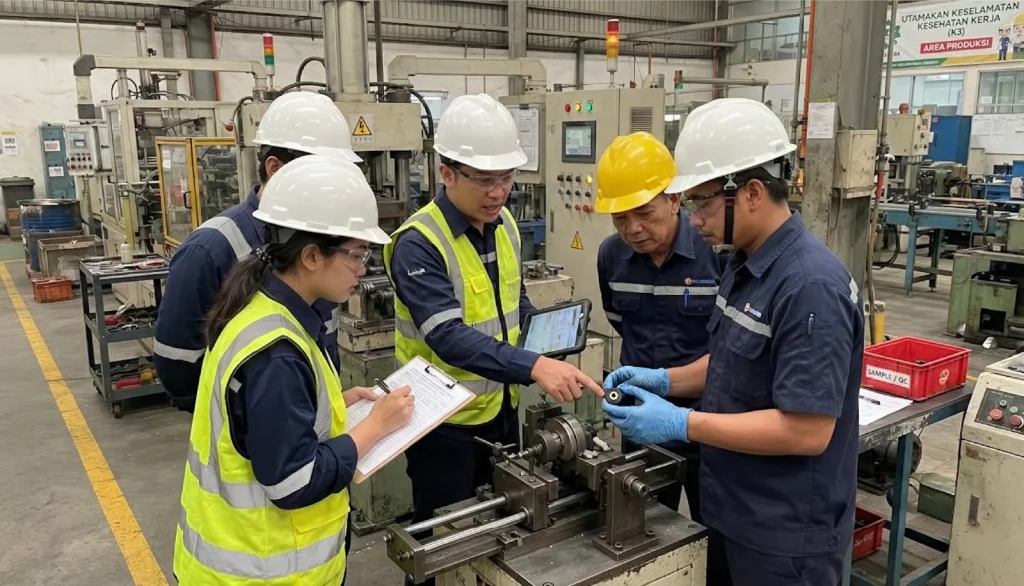
The process does not end once nonconforming products have been separated or reworked. Companies also need to evaluate the causes to help minimize the recurrence of similar issues.
Some measures that can be implemented include clarifying inspection criteria, ensuring consistent recording of findings, evaluating related processes, and monitoring the results of corrective actions.
This approach helps make quality control more systematic while supporting coordination between production and QA/QC teams.
For B2B businesses, understanding how nonconforming products are handled can be one of the considerations when evaluating a company’s manufacturing processes and quality control system.
Learn more about automotive spare parts manufacturing and quality control activities at PT Sejati Jaya Tangerang.