
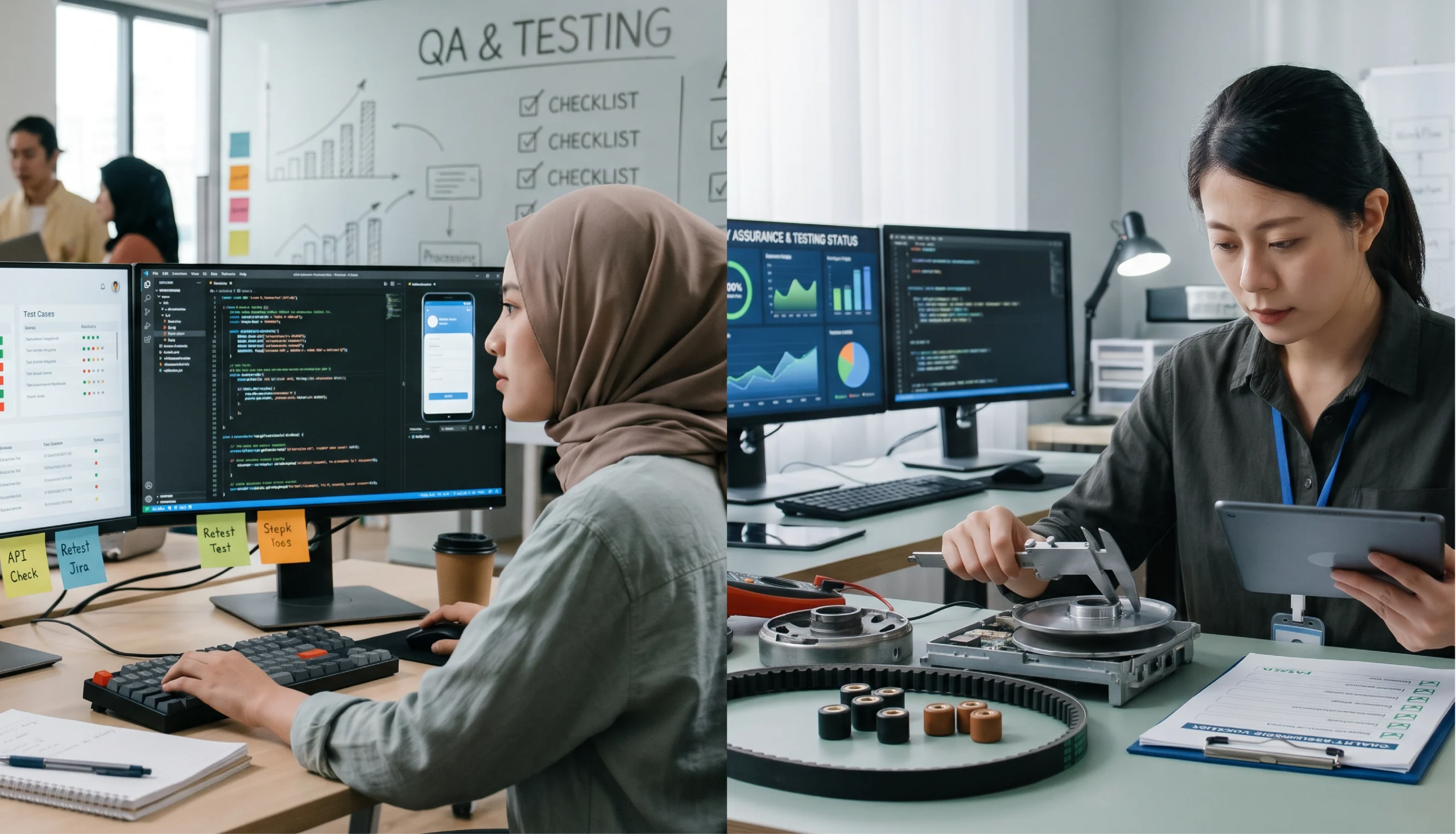
Quality Assurance and Quality Control: What Is the Difference?
In manufacturing, maintaining quality involves more than inspecting products after they have been made. A well-structured production process and inspections of the resulting products are both important to ensuring that quality requirements are taken into account.
The terms Quality Assurance and Quality Control are also commonly used in production activities. Although both relate to quality, they have different focuses and roles. Understanding these differences can help production teams recognize how quality is managed throughout the process, from production to the final output.
Understanding Quality Assurance in Manufacturing

Quality Assurance (QA) is an approach that focuses on the processes and systems used to help maintain quality. QA concerns how production processes are planned and controlled to minimize the potential for nonconformities.
In manufacturing practice, QA does not focus solely on the condition of the product. It also considers the processes that support the production of results that meet requirements.
Activities related to QA include:
- Production process control.
- Structured work systems.
- Process evaluation.
- Efforts to prevent nonconformities.
- Improvements to processes that require better control.
Therefore, QA primarily focuses on how processes are carried out to help build quality throughout production.
Understanding Quality Control in the Production Process

Unlike QA, Quality Control (QC) focuses more on inspecting and controlling production outputs. QC helps determine whether the products or processes being inspected meet the specified requirements.
Inspections can be conducted during production or after the production process, depending on quality control needs.
In manufacturing activities, QC can help to:
- Assess the condition of production outputs.
- Identify nonconformities.
- Monitor product quality.
- Provide information for evaluation.
- Help control production outputs to maintain consistency.
For these reasons, QC plays an important role in product quality inspection and monitoring.
Differences Between Quality Assurance and Quality Control
The differences between Quality Assurance and Quality Control in manufacturing can be understood by looking at their respective focuses and approaches.
| Aspect | Quality Assurance (QA) | Quality Control (QC) |
| Focus | Processes and systems | Inspection and outputs |
| Objective | Help prevent quality problems | Identify and control nonconformities |
| Approach | Preventive and systematic | Inspection and control |
| Application | Related to the overall process | During and/or after production |
| Role | Guide processes to ensure better control | Inspect outputs for conformity |
QA and QC are not two functions that replace one another. Instead, they can work together to support quality control in manufacturing activities.
The Relationship Between Quality Assurance and Quality Control
During production, QA and QC can exchange information and support each other. QA helps establish more structured processes, while QC provides information about the condition of production outputs.
In simple terms, their relationship can be illustrated through the following sequence:
Process Control → Production → Inspection → Identification of Nonconformities → Evaluation → Improvement and Control
QC inspection results can provide input for process evaluation, while QA systems help ensure that processes are managed in a more structured manner.
Key Considerations for Implementing QA and QC
Implementing QA and QC requires coordination between processes and inspections. Several important considerations include:
- Processes should be well structured so that production activities can be controlled.
- Inspections should be carried out consistently to assess the condition of production outputs.
- Inspection results should be followed up and used as input for process evaluation.
- QA and QC should support each other because quality does not depend on a single function.
This distinction can help companies assess quality more comprehensively, ranging from how processes are executed to how the resulting products are inspected.