

Design and Evaluation of Pulleys, V-Belts, and Dual Clutch Plates
Automotive component development requires a structured process, from understanding requirements and developing designs to conducting evaluations. This also applies to the design of CVT components, such as Pulleys, V-belts, and Centrifugal Clutch Plates.
Each component has its own function and characteristics, so its design needs to be evaluated to ensure it meets the required specifications before proceeding to the next stage.
CVT Component Design Starts with Requirements
The initial stage involves understanding the function and requirements of the component to be developed. Several factors to consider include:
- The component’s function within the CVT system.
- Its intended application.
- Its relationship with other CVT components.
- The required shape and characteristics.
This information serves as the foundation for developing the product design.
Developing Designs Based on Requirements
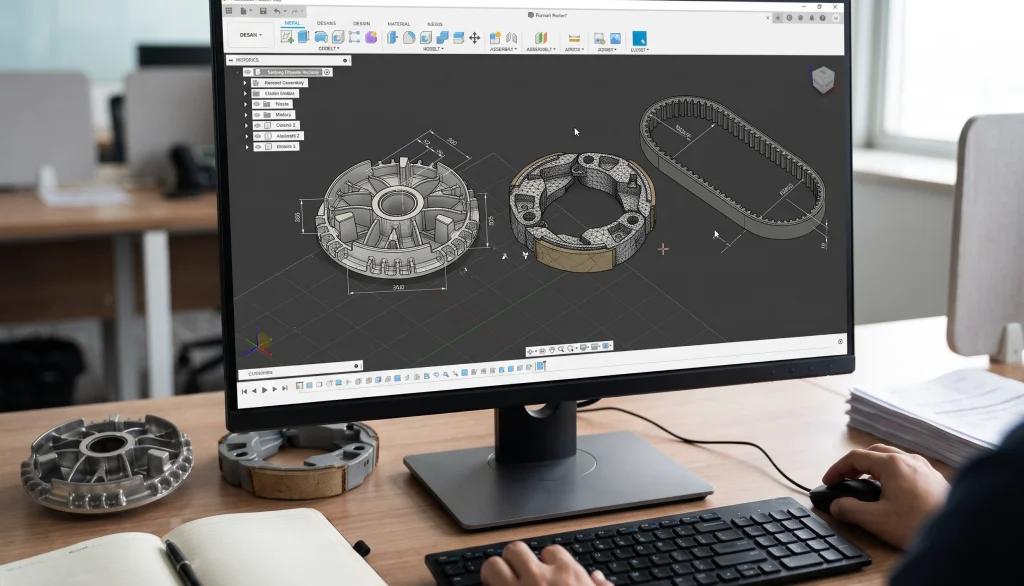
Once the requirements are understood, the process continues with developing a design concept. At this stage, product requirements are translated into a component design that can be developed and evaluated.
In general, the design process may include:
- Identifying component requirements.
- Developing a design concept.
- Defining the general shape and characteristics.
- Aligning the design with the CVT system.
- Preparing the design for evaluation.
The resulting design then serves as a basis for determining whether the component meets its intended development objectives.
Evaluating CVT Pulleys, V-Belts, and Centrifugal Clutch Shoes
Each component has its own function and characteristics. Therefore, the design and evaluation of CVT pulleys, V-belts, and centrifugal clutch shoes should focus on the aspects relevant to each component.
CVT Pulley
The pulley is part of the CVT mechanism and operates in conjunction with other components. During the evaluation stage, attention may be given to its shape, design suitability, and relationship with the CVT mechanism.
Evaluation helps determine whether the design meets the requirements established during the initial stage.
CVT V-Belt
The V-belt connects the pulleys within the CVT system. Since it interacts directly with other components, design suitability and physical condition are among the factors that may be considered during evaluation.
Centrifugal Clutch Shoes
Centrifugal clutch shoes are part of the clutch mechanism within the CVT system. During product development, evaluation may focus on design suitability, their relationship with the power transmission mechanism, and the condition of the developed component.
Key Aspects to Consider During Evaluation
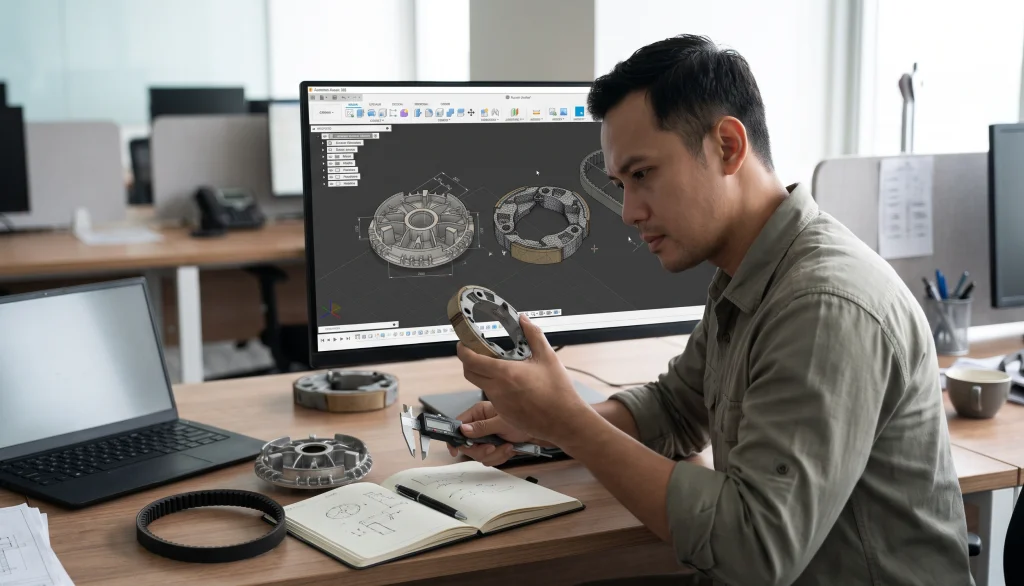
Product evaluation is necessary to determine whether the design meets the established requirements. Several general aspects to consider include:
- Design suitability: Assessing whether the design aligns with the component’s requirements.
- Shape consistency: Checking whether the finished component matches the design.
- Component compatibility: Evaluating how the component fits and interacts with the CVT system.
- Physical condition: Identifying any changes or deviations from the required specifications.
- Evaluation results: Using the findings to determine whether adjustments are necessary.
Evaluation is not merely an inspection stage; it can also serve as a basis for determining the next steps in the development process.
Adjustments as Part of the Development Process
Evaluation results do not always lead directly to the next stage of product development. If areas requiring improvement or adjustment are identified, the process may return to an earlier stage.
The general workflow may follow this sequence:
Evaluation → Identification → Adjustment → Re-evaluation
This approach allows the design to be refined gradually based on the evaluation results. This iterative cycle helps ensure that product development progresses in a structured manner.
Product Development in the Automotive Component Industry
In the automotive industry, the development process helps ensure that components are reviewed systematically before moving on to the next stage. This is important for brand owners, purchasing and procurement teams, distributors, and automotive manufacturers when discussing component requirements.
During product development, companies also work on various other automotive components that may become part of their future product offerings. Therefore, processes such as design, evaluation, and adjustment are important to understand when assessing the development of an automotive component.