
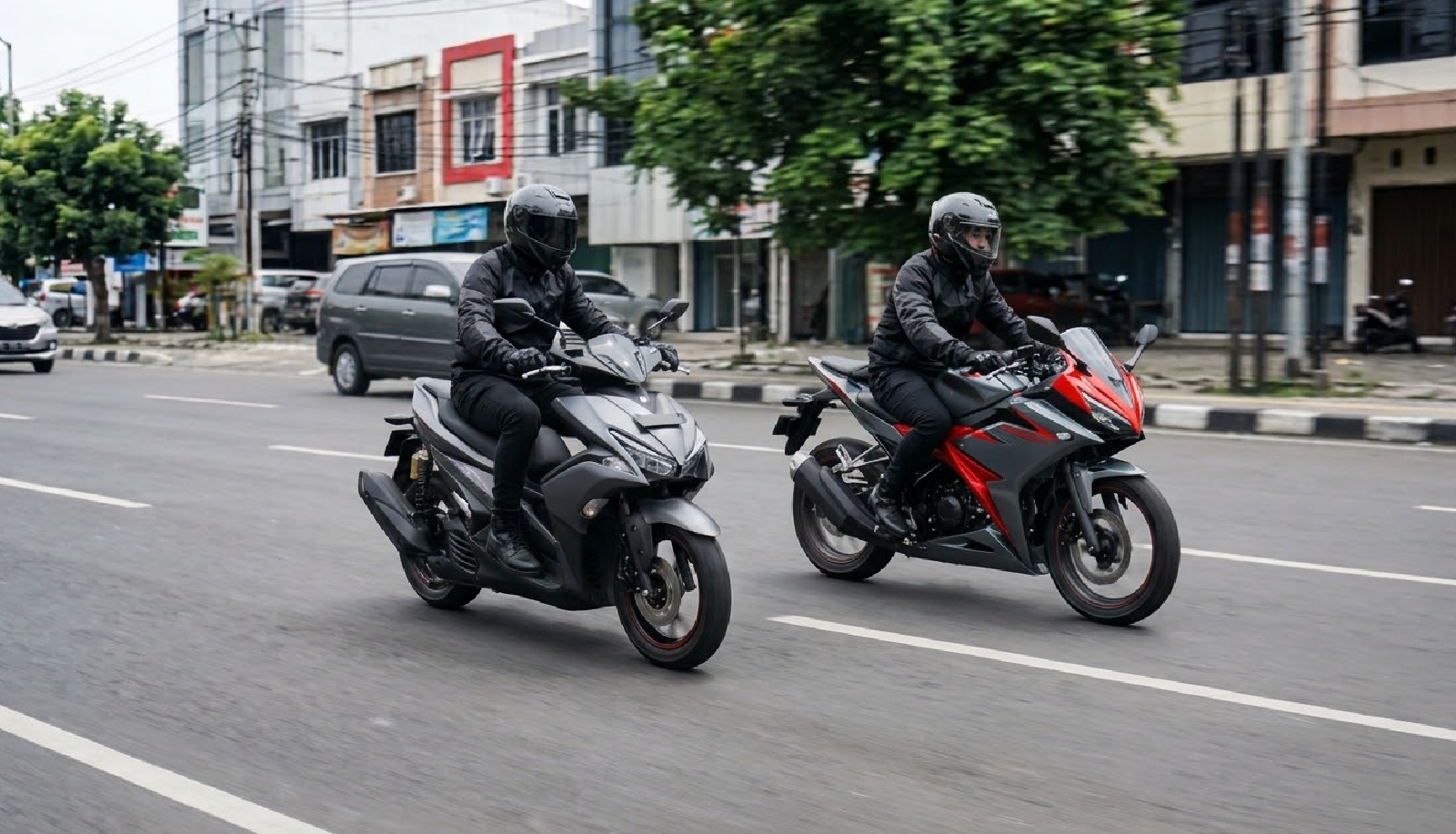
Manual vs Automatic Motorcycles: Differences in Transmission Systems
Manual and automatic motorcycles use different transmission systems. These differences can be seen in how the motorcycles are operated, the components they use, and their spare parts requirements.
For motorcycle owners and those new to automotive topics, understanding the differences between manual and automatic motorcycle transmissions can help them recognize each vehicle’s characteristics and choose suitable components for maintenance.
What Are the Differences Between Manual and Automatic Motorcycles?
In general, the differences between the two types can be seen in the following aspects:
| Aspect | Manual Motorcycle | Automatic Motorcycle |
| Transmission system | Gear transmission | Automatic transmission/CVT |
| Gear shifting | Controlled by the rider | Operates automatically |
| Operation | Requires gear and clutch control | Simpler to operate |
| Main components | Transmission gears, clutch, gear shifter | Pulleys, V-Belt, Weight Roller, Piece Slider |
| Spare parts types | Manual transmission components | CVT components |
| Maintenance | Focuses on the gear and clutch systems | Focuses on CVT components |
These differences mean that the inspection and spare parts requirements for the two types of motorcycles are not exactly the same.
Differences in Transmission Components
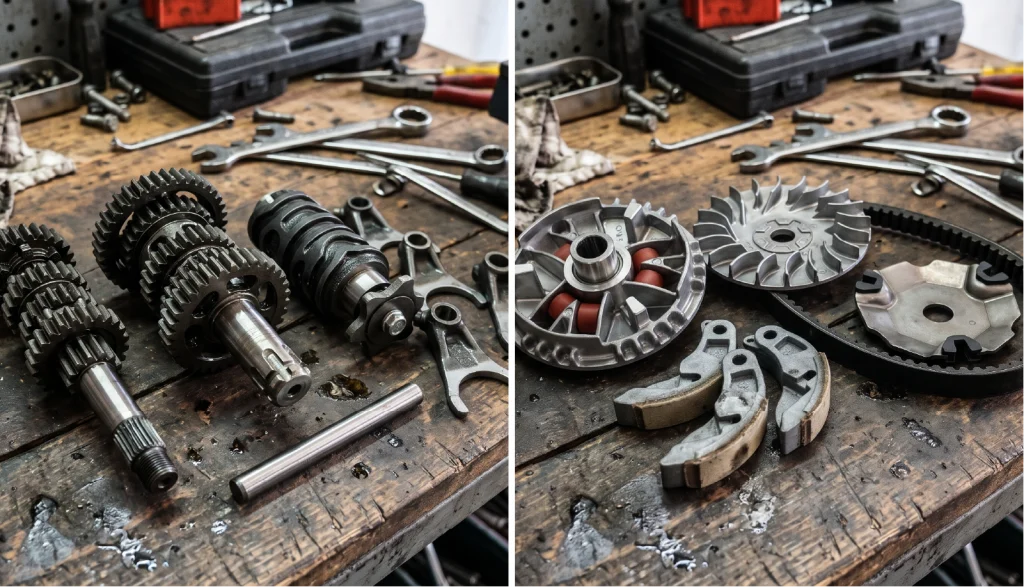
The most noticeable difference lies in the components used.
Manual motorcycles use transmission components related to the gears, clutch, and gear-shifting mechanism.
Automatic motorcycles, on the other hand, use several components in the CVT system, such as pulleys, V-Belts, Weight Rollers, and Piece Sliders.
Because the components differ, the spare parts used must also be matched to the type of motorcycle.
Differences in Operation
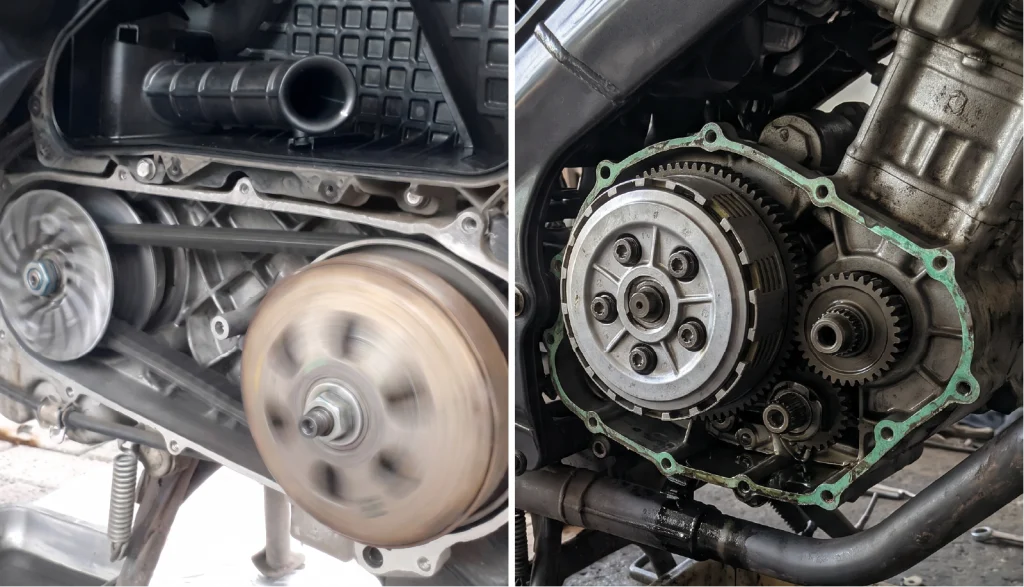
Manual motorcycles require riders to control the gears and clutch. Automatic motorcycles, meanwhile, do not require manual gear shifting during operation.
This is one of the most noticeable differences riders experience when using the two types of motorcycles.
Differences in Spare Parts Requirements
The type of transmission also affects which components need attention during maintenance.
For manual motorcycles, maintenance may focus on components related to the transmission and clutch systems. For automatic motorcycles, inspections may include CVT components, depending on the vehicle’s condition.
Weight Rollers and Piece Sliders are examples of spare parts used in the CVT systems of automatic motorcycles.
Choosing Based on User Needs
The choice between a manual and an automatic motorcycle can depend on each rider’s needs and habits. Neither type needs to be considered better than the other, as riding preferences and requirements vary from person to person.
Several factors to consider include:
- Riding habits
- Preferred operating style
- Intended vehicle use
- Familiarity with motorcycle components
- Maintenance and spare parts requirements
By understanding the differences, users can more easily recognize the characteristics of the vehicle they are using and determine their spare part requirements more accurately.