
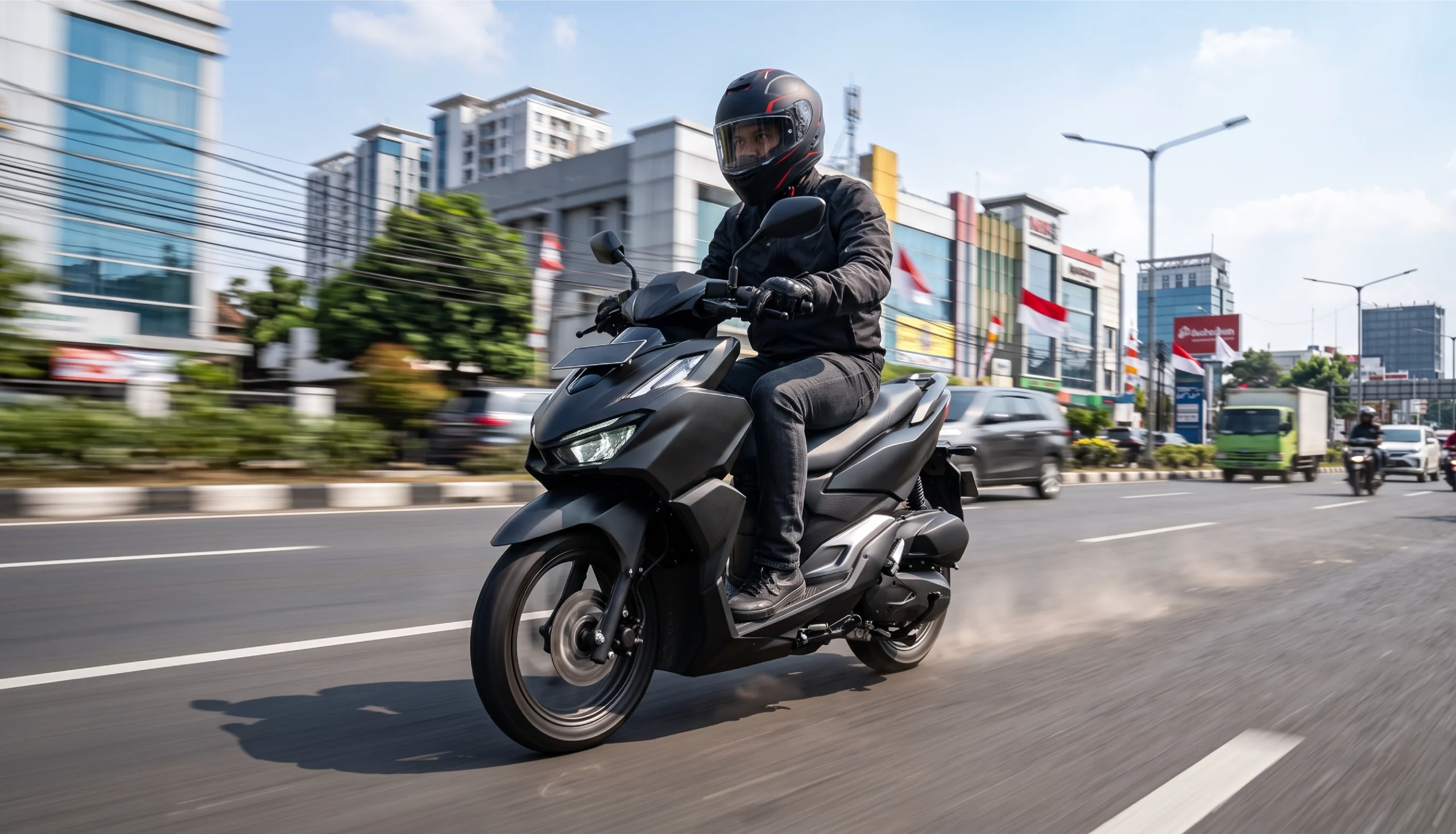
How Automatic Motorcycles Move? Here Is CVT System Works
When the throttle is twisted, an automatic scooter moves immediately without the rider needing to shift gears manually. Behind this seemingly simple process, a series of components work in sequence to transfer engine power to the rear wheel.
So, how exactly does a scooter’s CVT system operate? From the engine rotation, pulleys, weight rollers, and V-belt to the clutch, each component plays a distinct role. Understanding this process helps motorcycle owners and automotive beginners grasp what happens when the scooter starts moving.
From Engine Rotation to the Rear Wheel
The power generated by the engine is not transmitted directly to the rear wheel. Instead, it passes through a series of interconnected mechanisms:
Engine → Primary Pulley → V-Belt → Secondary Pulley → Clutch → Rear Wheel
The primary pulley receives rotation from the engine. As the pulley changes position, it affects the position of the V-Belt. The belt then transfers power to the secondary pulley before the power is transmitted through the clutch mechanism to the rear wheel.
This sequence is an important part of how a motorcycle CVT system operates in an automatic scooter.
What Happens When the Scooter Starts Moving?
When the scooter is stationary and the rider begins to open the throttle, the process takes place automatically. Engine speed increases, the Weight Roller responds to centrifugal force, and the primary pulley mechanism changes position. The V-Belt adjusts its position on the pulleys, while the secondary pulley responds to these changes.
Once the clutch engages, power can be transmitted to the rear wheel. As the vehicle’s speed changes, the working positions of the pulleys and V-Belt also adjust, allowing the system to change the transmission ratio continuously without manual gear shifting.
The Role of Each Component in the CVT Mechanism
| Component | Role |
| Primary Pulley | Receives engine rotation and changes its working position |
| Weight Roller | Helps change the position of the pulley mechanism |
| Piece Slider | Helps guide the movement of the roller housing mechanism |
| V-Belt | Transfers power between the primary and secondary pulleys |
| Secondary Pulley | Responds to changes in the V-Belt position and transfers power |
| Clutch Shoes | Help connect power to the rear wheel |
Each component does not work independently. The movement of one component is connected to the movement of others, allowing the CVT mechanism to operate continuously.
The CVT Working Process from the Engine to the Rear Wheel
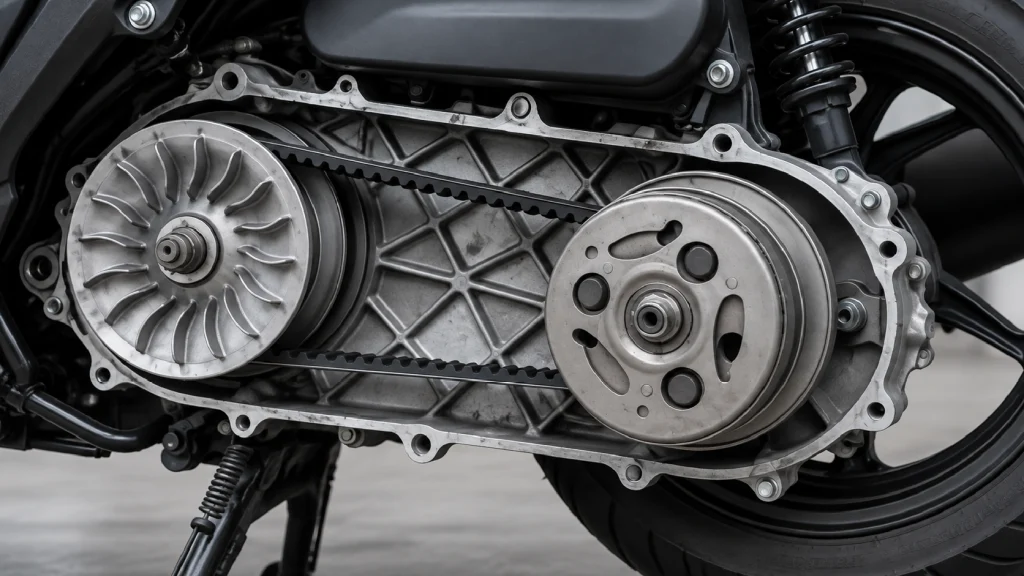
To understand how an automatic scooter works, it is important to know how power travels from the engine to the rear wheel through the CVT system.
1. The Engine Generates Rotation
When the engine is running and its speed increases, power is transmitted toward the primary pulley.
2. The Weight Roller Responds to Engine Speed
The Weight Roller moves due to centrifugal force. This movement helps push the primary pulley mechanism, causing its position to change.
3. The Primary Pulley Changes Position
As the position of the pulley changes, the working distance between the pulley surfaces also changes. This condition affects the position of the V-Belt.
4. The V-Belt Adjusts Its Position
The V-Belt connects the primary and secondary pulleys. As the working positions of both pulleys change, the V-Belt adjusts accordingly, allowing the transmission ratio to change continuously.
5. The Secondary Pulley Responds
The secondary pulley adjusts to changes in the V-Belt position and helps transfer power to the next part of the system.
6. The Clutch Transmits Power
At a certain rotational speed, the centrifugal clutch engages to connect the transmitted power to the rear wheel, allowing the scooter to start moving.
Understanding how a CVT system works helps you see how each component contributes to transmitting engine power to the rear wheel. With the right and properly manufactured components, the CVT system can operate effectively and support the performance of an automatic scooter.