
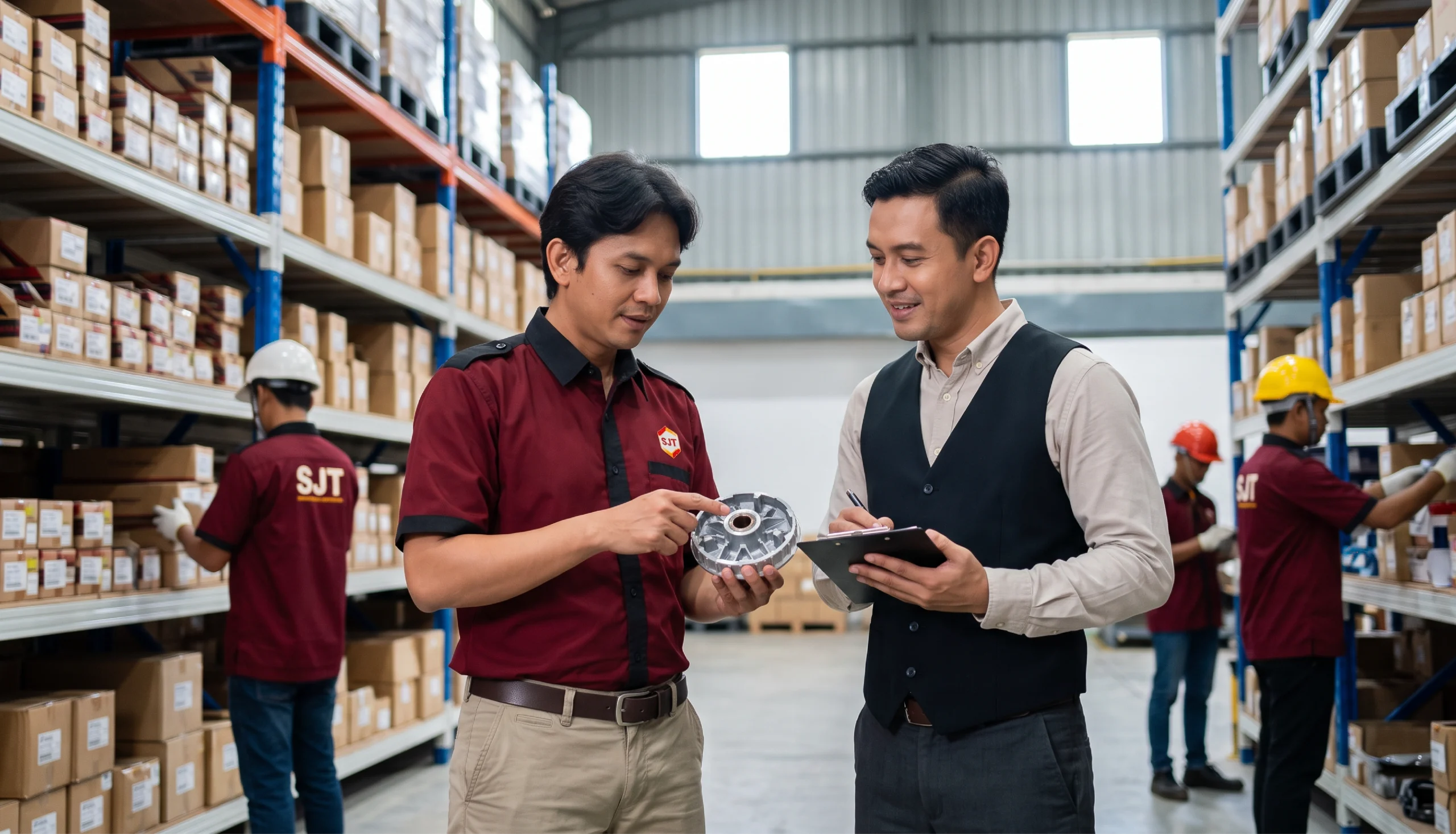
Motorcycle Parts Manufacturers: Important Considerations Before Partnering
Motorcycle spare-part manufacturers play an important role in meeting the automotive component needs of various businesses, including importers, distributors, suppliers, spare-parts retailers, and resellers. Within the automotive supply chain, manufacturers are involved in component production, quality inspections, and ensuring that products meet the specifications required by businesses.
Before establishing a business partnership with a manufacturer, companies need to understand the types of components they require and consider manufacturing processes, quality consistency, communication, and potential partnership arrangements. So, what should businesses consider when choosing a motorcycle spare-part manufacturer to support their operations?
Understand Your Business’s Spare-Part Requirements
The first step before contacting a manufacturer is to identify the components needed for resale or business operations. Product types, vehicle applications, specifications, and estimated order volumes should be determined to make the search for a manufacturing partner more focused.
For importers, distributors, suppliers, resellers, and other businesses, this information can serve as a basis for identifying products that meet market requirements. Meanwhile, companies requiring components with specific specifications need to ensure that these requirements can be clearly communicated to the manufacturer.
Understanding these requirements from the outset allows prospective partners to discuss product suitability and potential cooperation in a more structured manner. It also gives manufacturers a clearer picture of component requirements, providing a basis for further discussions.
Check the Manufacturer’s Production Capabilities
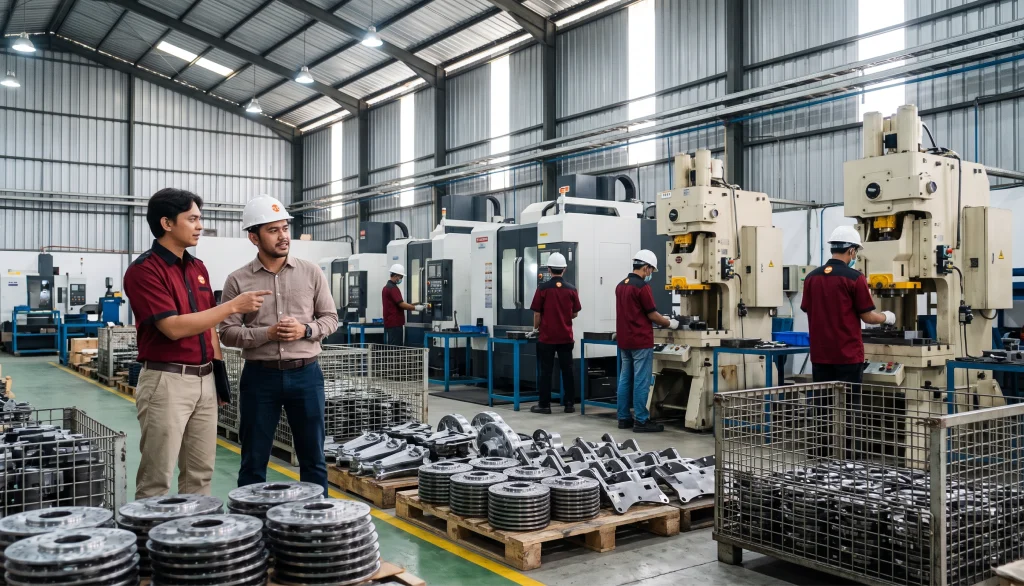
Production capability is an important factor to consider when looking for a motorcycle spare-part manufacturer. This includes the types of components the company can produce, the manufacturing processes it uses, and whether its production activities align with the prospective partner’s requirements.
Before establishing a partnership, prospective partners can gather information about the company’s manufacturing capabilities and the types of components it produces. Discussions about product specifications, production requirements, and the scope of cooperation are also necessary to ensure that both parties share a clear understanding.
Review the Quality Control System
Product quality is an important aspect of motorcycle spare-part manufacturing. Components produced by manufacturers may pass through distributors and suppliers before reaching spare-parts retailers or end users. Therefore, product inspection should be an important consideration in business decisions.
Prospective partners can ask about product inspection procedures, production consistency, and the implementation of Quality Assurance (QA) and Quality Control (QC) processes in manufacturing operations.
Understanding product inspection procedures can help businesses evaluate a manufacturer. This means that partnership decisions are based not only on the types of products available but also on information about the manufacturer’s quality-control processes.
Consider Partnership Models and Contract Manufacturing Requirements
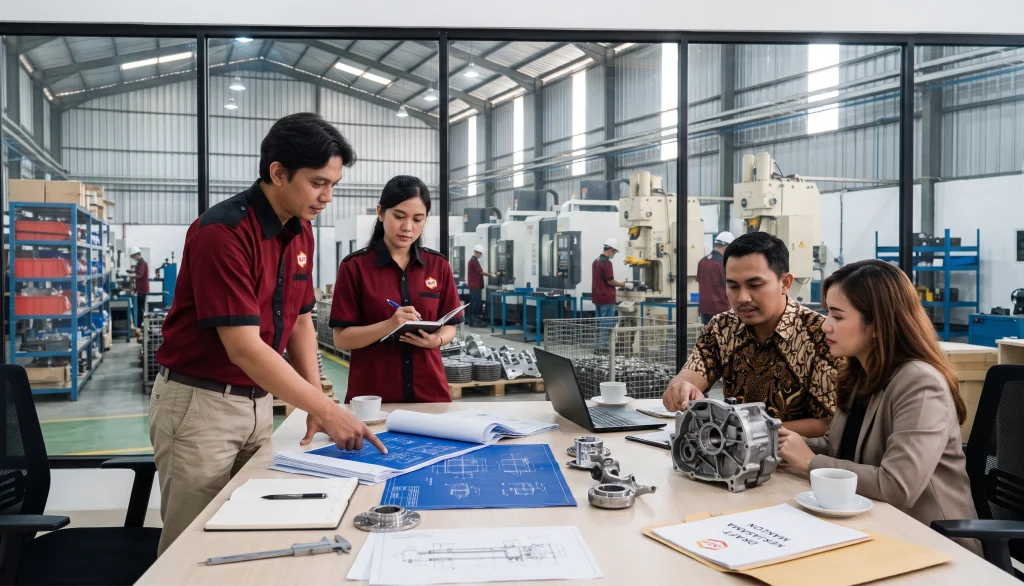
Not every company needs finished products solely for resale. Some businesses may require a manufacturing partner to discuss producing components based on specific requirements and specifications.
One business arrangement that addresses these needs is contract manufacturing, also known as maklon in Indonesia.
In a contract manufacturing arrangement, key aspects to discuss include product specifications, production requirements, manufacturing processes, Quality Control, and the scope of work. Before selecting a manufacturer, ensure that all requirements are communicated clearly so that both parties understand the terms of cooperation. The availability of contract manufacturing services should be confirmed directly with the company concerned.
Ensure Clear Communication and Responsive Support
Communication is an important part of business relationships between manufacturers and suppliers, distributors, importers, and companies that require automotive components. Information about products, specifications, production processes, and partnership requirements needs to be communicated clearly to reduce the risk of misunderstandings.
Several factors to consider include:
- Response time when prospective partners ask questions.
- Clarity of product information and specifications.
- Ease of coordination during partnership discussions.
- The ability to understand prospective partners’ requirements.
- Clear communication regarding manufacturing and procurement processes.
For purchasing and procurement teams, effective communication can help with information gathering before making purchasing decisions. For suppliers and distributors, coordination with manufacturers can help clarify product information needed for distribution activities.
Don’t Compare Prices Alone
Price is one factor to consider when choosing a motorcycle spare-part manufacturer. However, businesses should also evaluate product suitability, manufacturing processes, quality, and partnership arrangements before selecting a business partner.
Consider comparing the following aspects:
| Aspect | What to Consider |
| Price | Alignment with the budget and business requirements |
| Products | Suitability of component types and specifications |
| Quality | Information about inspections and production consistency |
| Production | Alignment between manufacturing capabilities and partner requirements |
| Communication | Clarity of information and ease of coordination |
| Partnership | Alignment between the scope of production and business requirements |
By considering these aspects, suppliers, distributors, importers, and other prospective partners can evaluate manufacturers more comprehensively. This approach helps businesses understand the factors to consider before selecting a source of supply or exploring a manufacturing partnership.
When evaluating a manufacturer, suppliers, distributors, importers, and other prospective partners should first assess product suitability, quality, and production capabilities. The goal is to establish a partnership that genuinely meets business requirements rather than making a decision based solely on price.