

Pulley and V-Belt Functions in Motorcycle CVT
When an automatic scooter is moving, engine power is transmitted through the CVT system. Within this system, the CVT pulleys and V-Belt work together to adjust the transmission ratio and transfer power to the wheel.
Understanding how these components work together helps riders better understand CVT operation and maintenance.
Understanding the Relationship Between the Pulley and V-Belt in a CVT System
The CVT pulley system consists of a primary pulley and a secondary pulley. The primary pulley is located on the engine side and receives rotational power from the engine, while the secondary pulley is located toward the rear and receives power through the V-Belt.
The V-Belt connects these two pulleys. It moves along their working surfaces as the pulley positions change, allowing power to be transmitted while the CVT system operates.
The Function of Pulleys in a CVT System
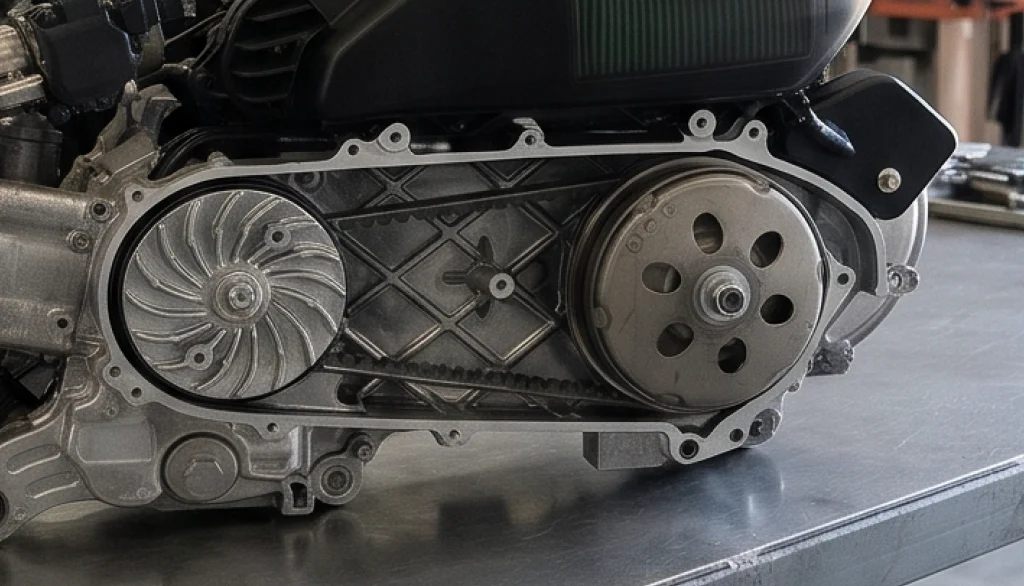
Pulleys play an important role in adjusting the transmission ratio. As engine speed changes, the mechanism in the primary pulley can alter the position of the V-Belt along its working surface. The secondary pulley then adjusts accordingly.
These changes in effective pulley diameter allow the CVT to continuously adjust the transmission ratio without manual gear shifting. This mechanism helps the scooter adapt to different power and speed requirements.
Primary and Secondary Pulleys
Simply put, the primary pulley receives power from the engine, while the secondary pulley receives power through the V-Belt and transfers it to the next part of the drivetrain.
The two pulleys do not operate independently because a change on one side is accompanied by an adjustment on the other.
The Function of the V-Belt in a CVT System
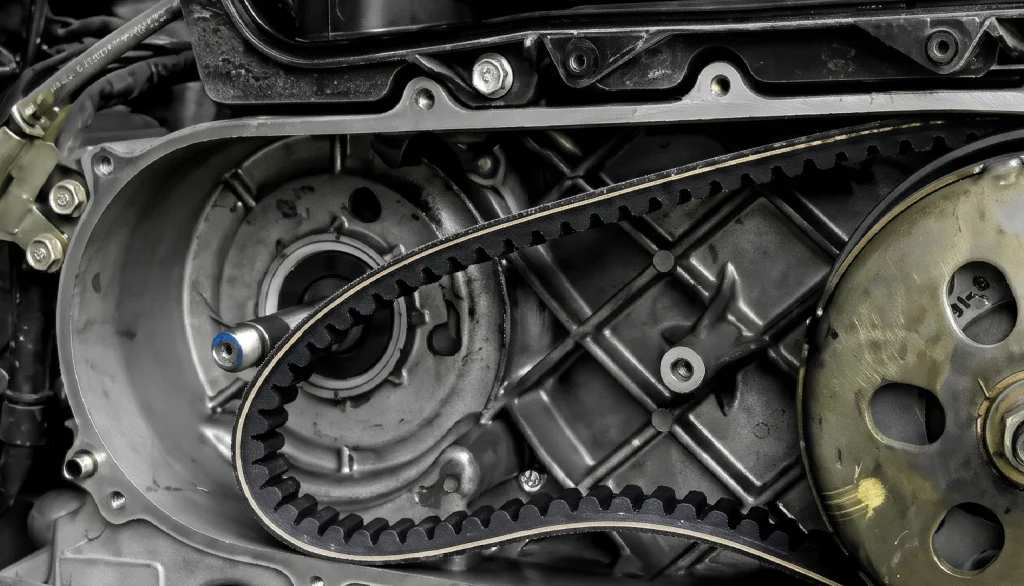
The V-Belt primarily connects the primary and secondary pulleys. As the working positions of the two pulleys change, the V-Belt moves along their surfaces to accommodate changes in their effective diameters.
Because the V-Belt operates continuously while the scooter is in use, its condition needs to be monitored. Wear, physical damage, or other abnormal conditions may indicate that the CVT system requires inspection.
How Do the Pulley and V-Belt Work Together in a CVT System?
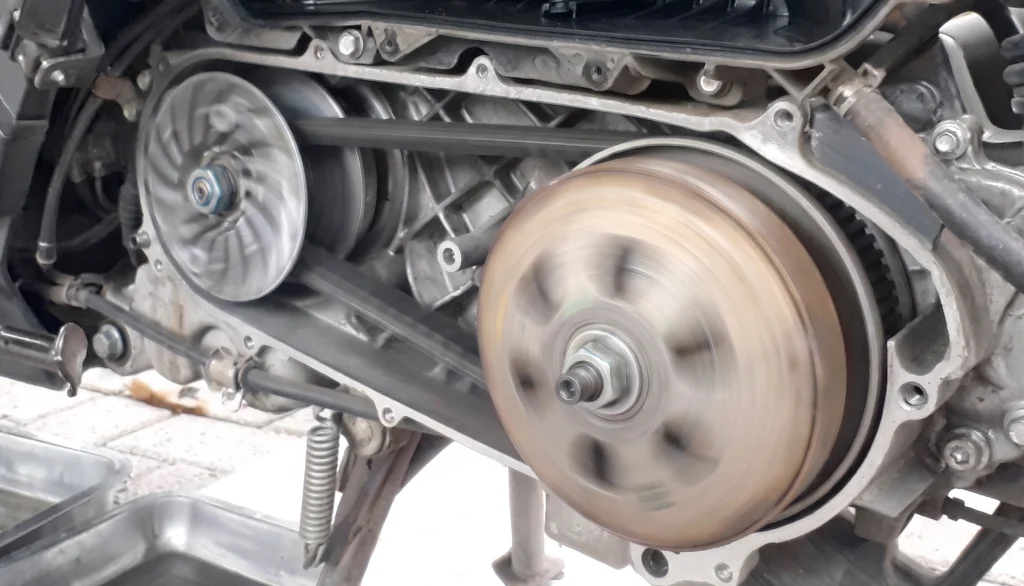
Their relationship can be illustrated as follows:
Engine → Primary Pulley → V-Belt → Secondary Pulley → Wheel
As engine speed increases, the primary pulley mechanism changes the position of its working surface. The V-Belt moves in response to this change, while the secondary pulley adjusts accordingly.
Through this continuous process, the CVT ratio changes to suit the scooter’s operating conditions. Therefore, the pulley and V-Belt should be understood as interconnected components that work together rather than as independent parts.
Signs That the Pulley and V-Belt Need Inspection
Certain changes in scooter performance may indicate that the CVT system needs inspection, including:
- Unusual noises coming from the CVT area.
- Changes in vibration while riding.
- Less smooth acceleration.
- Changes in acceleration response.
- Visible signs of wear on component surfaces.
- Visible changes in the V-Belt’s condition during inspection.
However, these symptoms do not necessarily originate from the pulley or V-Belt. Other CVT components may cause similar symptoms, so a thorough inspection of the entire system is recommended.
Regular CVT inspections can help identify changes in component condition before potential issues become more serious. Check the physical condition of the V-Belt and pulley surfaces, and make sure any replacement parts are compatible with the scooter’s requirements.
Understanding the function of each CVT component can help riders determine the appropriate inspection and maintenance steps.
PT Sejati Jaya Tangerang manufacturer automotive components. Visit the SJT website to learn more.