
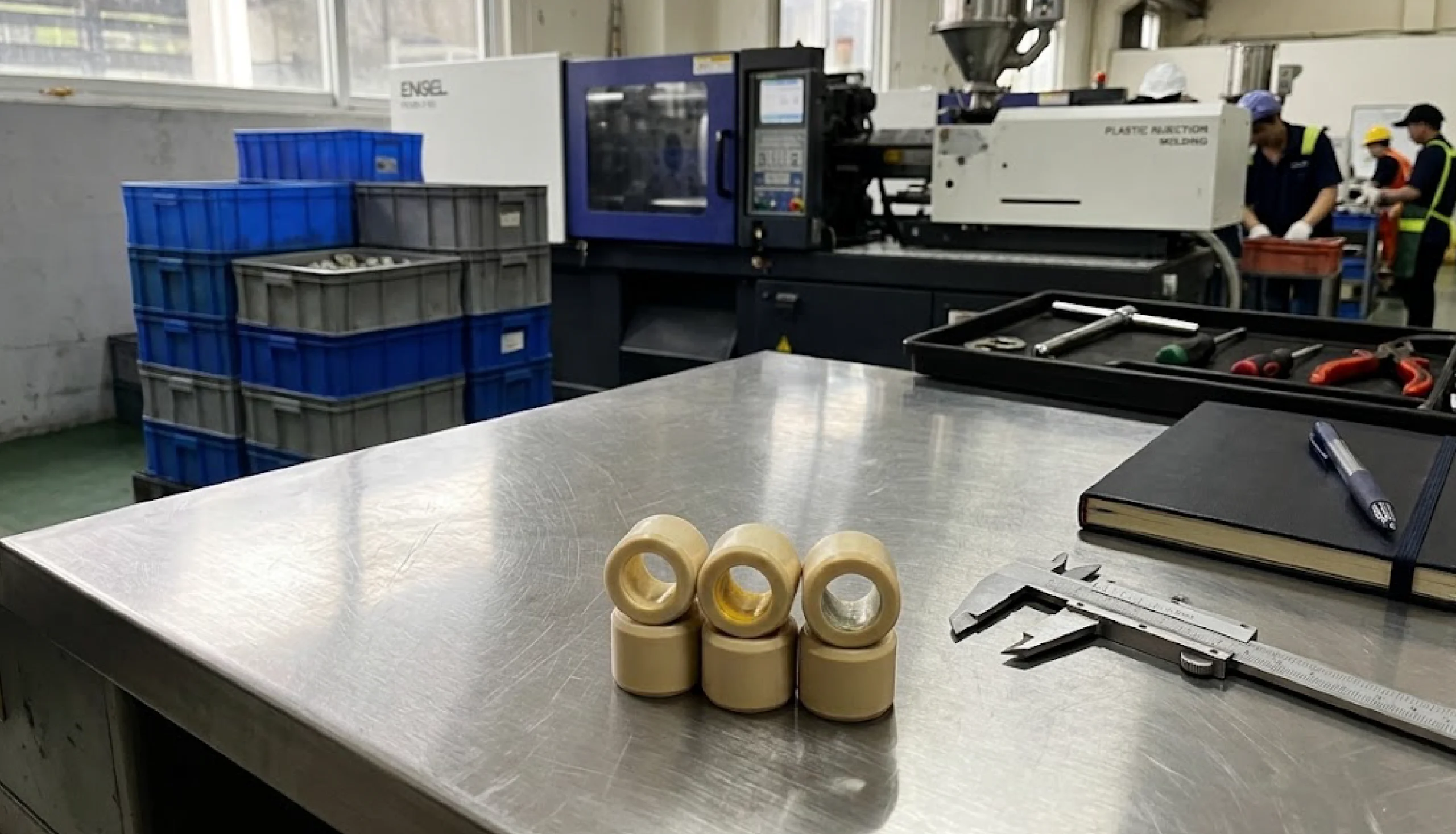
Understanding the Plastic Injection Process in Automotive Component Production
Plastic components used in the automotive industry require manufacturing processes tailored to their shapes and intended applications. One process used in manufacturing is plastic injection molding, in which components are formed using a mold.
The final result depends on more than the molding process itself. Material preparation, mold condition, process control, and product inspection are also important factors in ensuring that production meets the required specifications.
Plastic Injection Molding for Automotive Component Manufacturing
Plastic injection molding is a manufacturing process used to shape plastic material into components with specific forms by injecting it into a mold. This process allows the material to fill the mold cavity and take the required shape to meet production needs.
In the automotive industry, this process can be used to manufacture various plastic components. Different component designs require manufacturing processes tailored to the characteristics and requirements of each product.
Therefore, plastic injection molding must be supported by proper preparation and process control at every stage.
Stages of the Plastic Injection Molding Process for Automotive Components
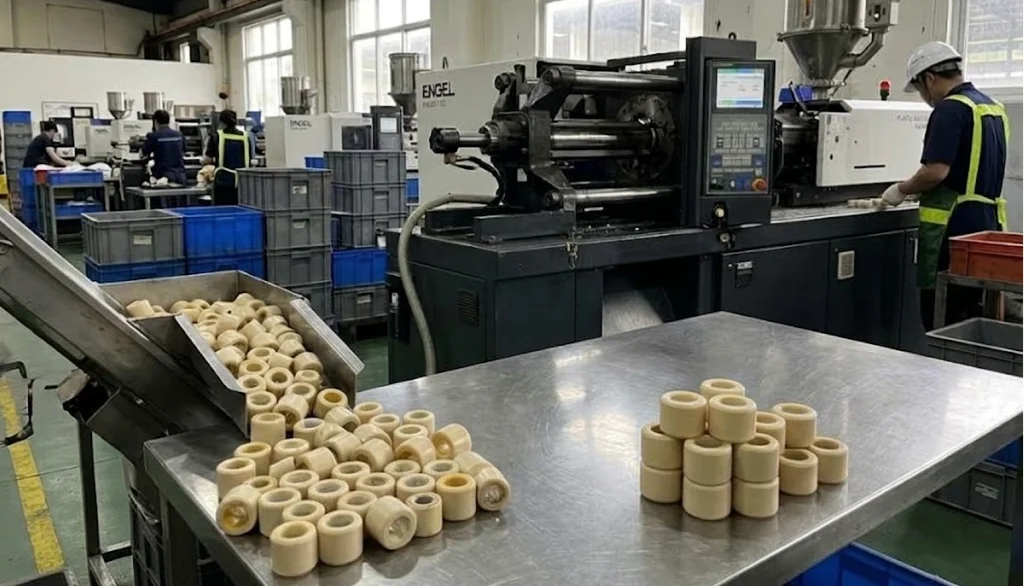
1. Material Preparation
The first stage involves preparing the material to be used in production. The material must be checked to ensure that it is in suitable condition before proceeding to the next stage.
Proper preparation helps keep the production process organized and reduces the likelihood of nonconformities during manufacturing.
2. Mold Preparation
The mold plays an important role because it shapes the material according to the component design. Before use, the mold’s condition must be checked to ensure that the molding process can meet the required specifications.
Mold preparation is also part of process control because the mold’s shape directly affects the shape of the resulting component.
3. Injection Process
Once the material and mold have been prepared, the injection process begins by injecting plastic material into the mold.
The material fills the mold cavity and takes its shape. At this stage, the process must be controlled to ensure that the component is formed according to production requirements.
4. Forming and Cooling
After the material enters the mold, it undergoes a forming process until it reaches a condition suitable for removal from the mold.
Cooling is an essential part of this stage before the component is ejected. Once removed from the mold, the component can be inspected to evaluate the molding results.
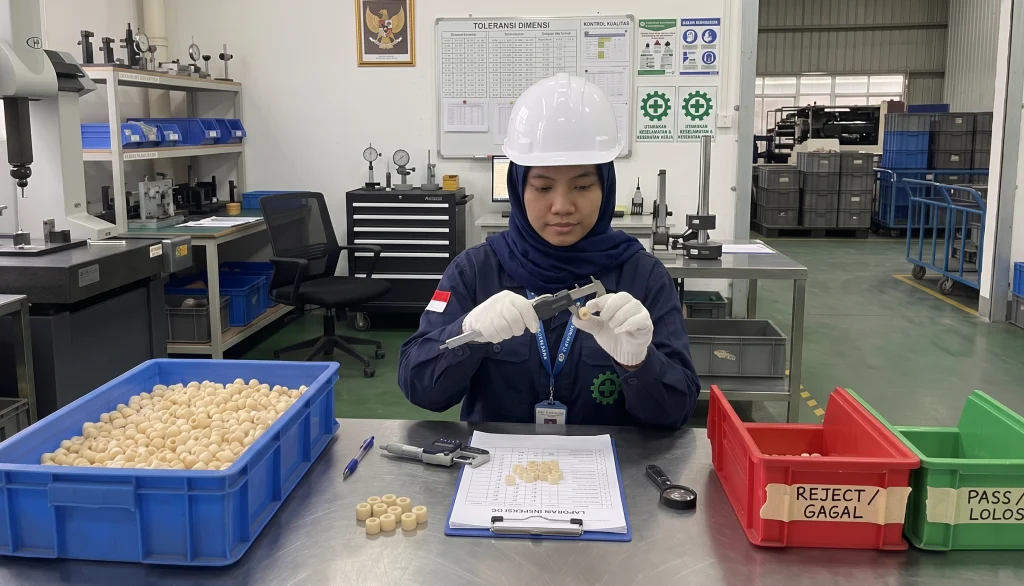
5. Production Inspection
Once the component has been formed, it must be inspected before proceeding to the next stage. This inspection helps identify any physical defects or molding results that require further evaluation.
Inspection is also important for detecting nonconformities during the production process.
6. Quality Control
Quality Control (QC) plays an important role in monitoring and controlling product quality during manufacturing. Inspections are carried out according to production requirements to help ensure that products meet the applicable specifications.
Through inspection and QC activities, production results can be monitored systematically, helping maintain product consistency.
Why Is Process Control Important?
In manufacturing, each stage is interconnected. Process control helps ensure that operations are carried out systematically and that production results can be monitored.
Several factors require attention, including:
- Process consistency: Helps ensure that manufacturing operations follow a consistent procedure.
- Material condition: Material is the starting point of the production process and must be suitable for use.
- Mold condition: The mold directly influences the shape of the resulting component.
- Product inspection: Helps assess the condition of the component after molding.
- Quality Control: Helps identify nonconformities and maintain consistent production results.
Therefore, plastic injection molding involves more than just shaping materials. It also requires inspection and control from the initial preparation stage through to the completion of the production process.
Plastic Injection Molding in Automotive Spare-Part Manufacturing
In automotive spare-part manufacturing, production processes must be adapted to the shape and characteristics of each component. Plastic injection molding is one of the manufacturing processes that can support the production of plastic components according to specific requirements.
In addition to molding, manufacturing activities may also involve CNC lathe and milling processes, Plastic and Metal Quality Assurance and Quality Control (QA/QC), and injection molding machine maintenance. Each area has its own role in supporting production activities and process control.