
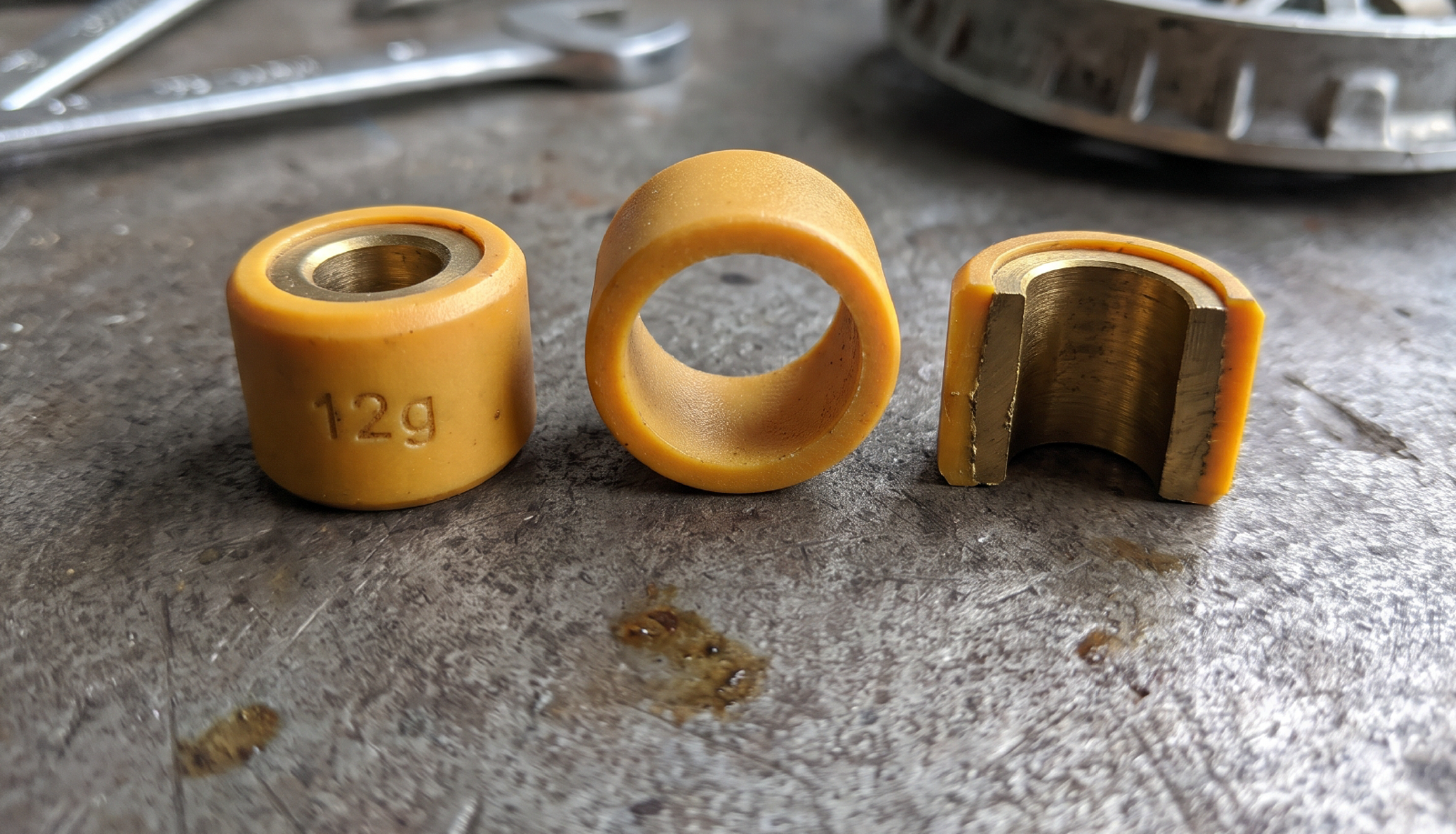
Weight Roller Outer Layer, Types and Manufacturing Process
The Weight Roller is one of the components found in an automatic scooter’s CVT system. Upon closer inspection, this component has an outer layer that forms the contact surface as the Weight Roller operates within the pulley mechanism. Therefore, the outer layer is one of the aspects that requires attention during the manufacturing process.
The outer layer is not just about the component’s physical appearance. Its shape, surface condition, and production consistency are also important factors to inspect to ensure that the component meets its design requirements.
What Is the Outer Layer of a Weight Roller?
Simply put, the outer layer of a Weight Roller is the surface that surrounds or forms the exterior of the component. This surface is related to the CVT’s operating mechanism, making its physical condition an important aspect of the manufacturing process.
In spare parts manufacturing, every component must be produced through a well-defined process. Attention must be given not only to the material itself but also to how it is shaped to achieve the surface finish and dimensions required for the product.
Types of Materials That Can Be Used
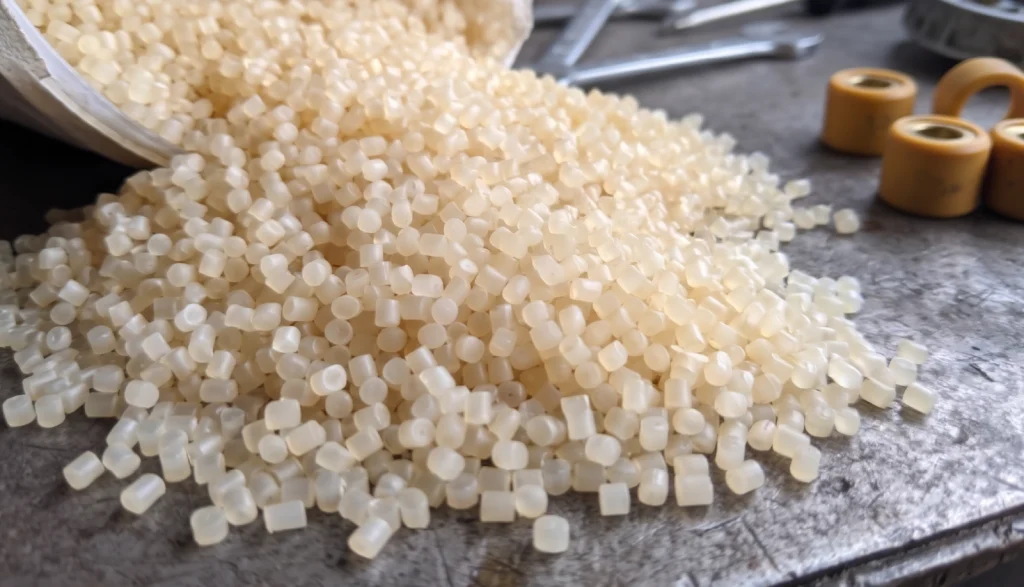
The materials used for the outer layer of a Weight Roller may vary depending on its design, product requirements, and specified standards. For certain component applications, polymer-based materials may be one option.
Some materials that may be found in similar components include:
1. Nylon
Nylon, also known as polyamide (PA), is a type of polymer that can be used to form the outer layer of a Weight Roller. This material can be processed using plastic molding methods appropriate to the product’s design.
When selecting nylon, its suitability should be evaluated based on the required shape, dimensions, and product characteristics.
2. PTFE (Teflon)
PTFE (polytetrafluoroethylene), commonly known by the brand name Teflon, has low-friction characteristics. This material may be used in certain applications, depending on the product design and specifications.
3. Composite Materials
Composite materials combine two or more materials to achieve specific characteristics. In Weight Roller applications, their use depends on the design requirements and manufacturing process.
4. Other Polymer Materials
In addition to nylon and PTFE, other types of polymers may also be used depending on product requirements. Therefore, the material used for a Weight Roller’s outer layer is not always the same and should be selected according to the specified requirements.
Different Weight Rollers may use different outer-layer materials. Understanding the material type and its specifications helps ensure that the selected product is suitable for its intended application.
How Is the Outer Layer of a Weight Roller Manufactured?
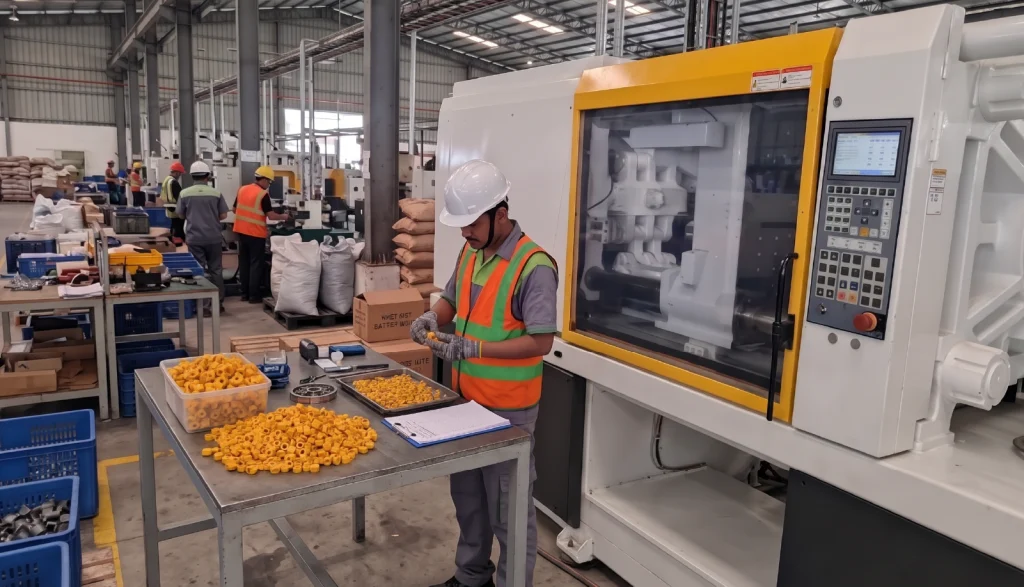
The manufacturing process for a Weight Roller’s outer layer generally consists of several interconnected stages.
1. Material Preparation
The process begins with preparing the materials required for production. Materials must be prepared before the forming stage to ensure that subsequent processes can follow the product design.
2. Forming Process
The material is then shaped using an appropriate manufacturing process. One method that can be used to produce plastic or polymer components is injection molding, a process in which material is injected into a mold to create a specific shape.
3. Production Inspection
After the forming process, the finished components must be inspected. This inspection may cover shape, surface condition, production consistency, and the overall physical condition of the components.
This stage is important because the condition of the finished components must be assessed before they proceed to the next stage.
4. Quality Control
Quality Control (QC) is an essential part of the manufacturing process. Inspections help verify whether production results meet the required specifications and support consistency across products.
The quality of a Weight Roller’s outer layer depends not only on the material used but also on the forming process, the condition of the finished components, and the inspections conducted throughout production and on the final product.
Why the Quality of the Outer Layer Matters
For mass-produced components, consistency is an important consideration. Differences in shape or surface condition that do not meet specifications may indicate the need for further inspection of the manufacturing process.
Therefore, quality control must be carried out systematically. In-process inspections and final product inspections help assess component conditions before the parts are used or proceed to the next production stage.
PT Sejati Jaya Tangerang is an automotive spare parts manufacturer that produces Weight Rollers, also known as CVT Rollers.