
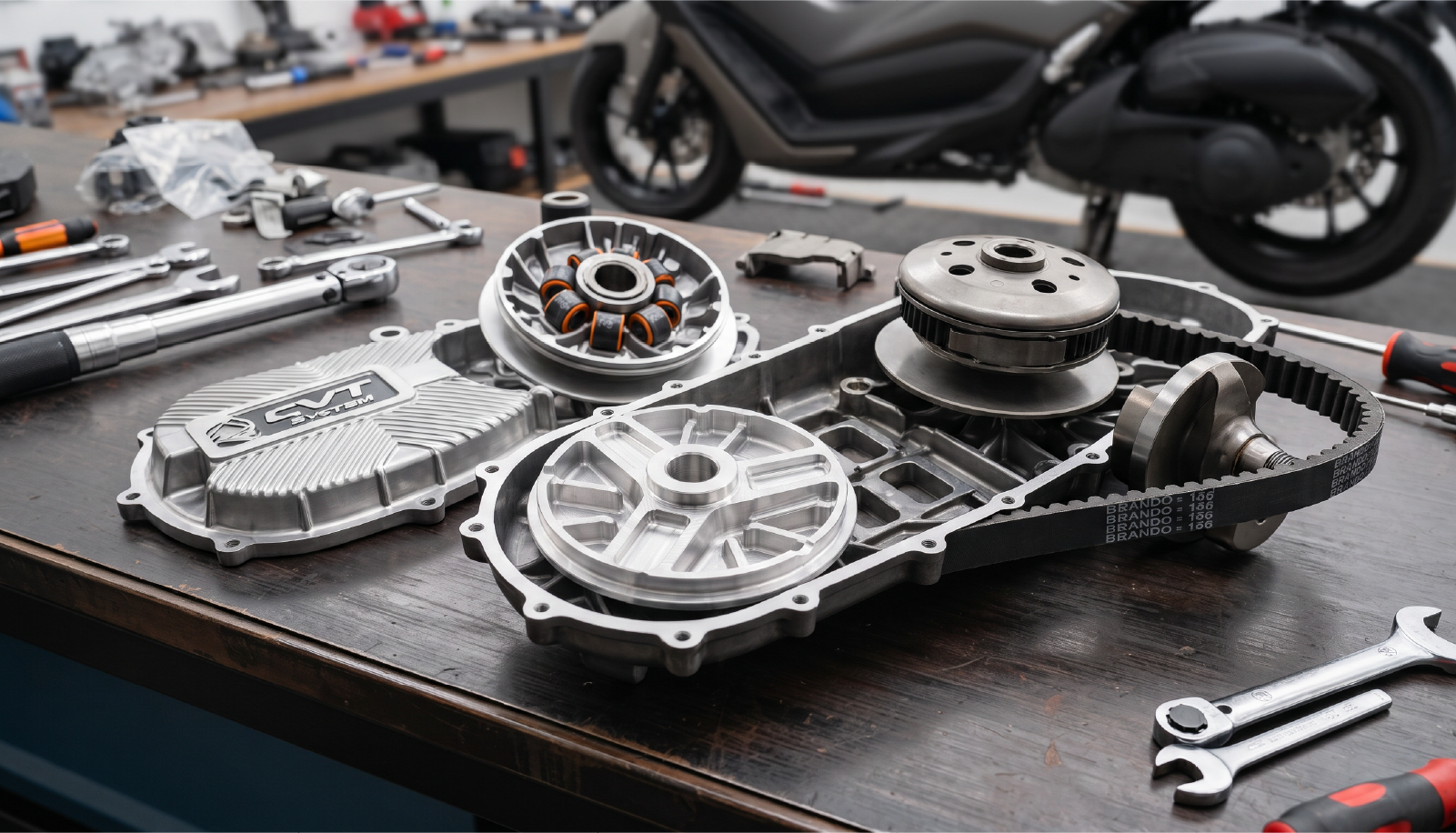
Why Weight Rollers Are Important in a CVT Mechanism?
When riding an automatic motorcycle, riders only need to twist the throttle without manually shifting gears. Behind this convenience, several components work together within the CVT mechanism. One of them is the CVT weight roller, a component located in the primary pulley assembly.
Although relatively small in size, the weight roller plays a role in supporting changes in the pulley mechanism as engine speed changes. In this article, we will take a closer look at the role of the weight roller in the CVT system and the conditions that should be monitored.
Why Is It Important to Monitor the Condition of the Weight Roller?
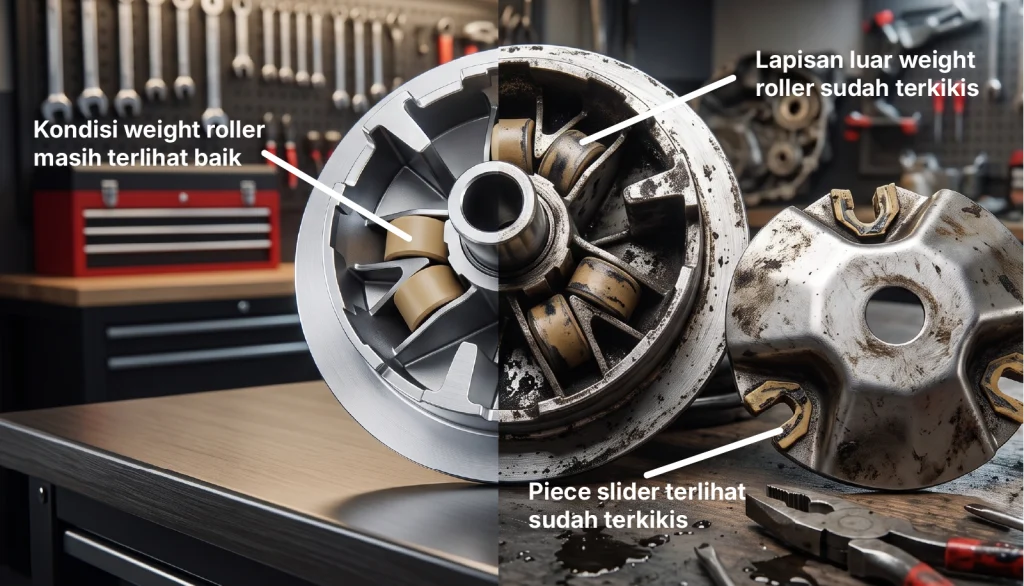
The weight roller is one of the components that operates within the CVT system and can experience wear over time. Its condition should be monitored because changes to its shape or surface may indicate that the component is beginning to wear.
Some conditions that may need to be checked include:
- Surface wear caused by friction during operation.
- Changes in roller shape that cause it to differ from its original form.
- Uneven surfaces or areas showing more significant wear.
- Physical damage, such as cracks, breakage, or excessive material wear.
These conditions may indicate that the weight roller requires further inspection. However, changes in motorcycle response are not necessarily caused by a single component. Other parts, such as the V-belt, pulley, roller housing, piece slider, and clutch shoes, should also be inspected because they work together as part of the CVT system.
If the motorcycle begins to feel different, produces unusual sounds, or shows changes in acceleration response, a thorough CVT inspection by a qualified technician can help determine the condition of the components and the appropriate course of action.
How Does the Weight Roller Work in the CVT Mechanism?
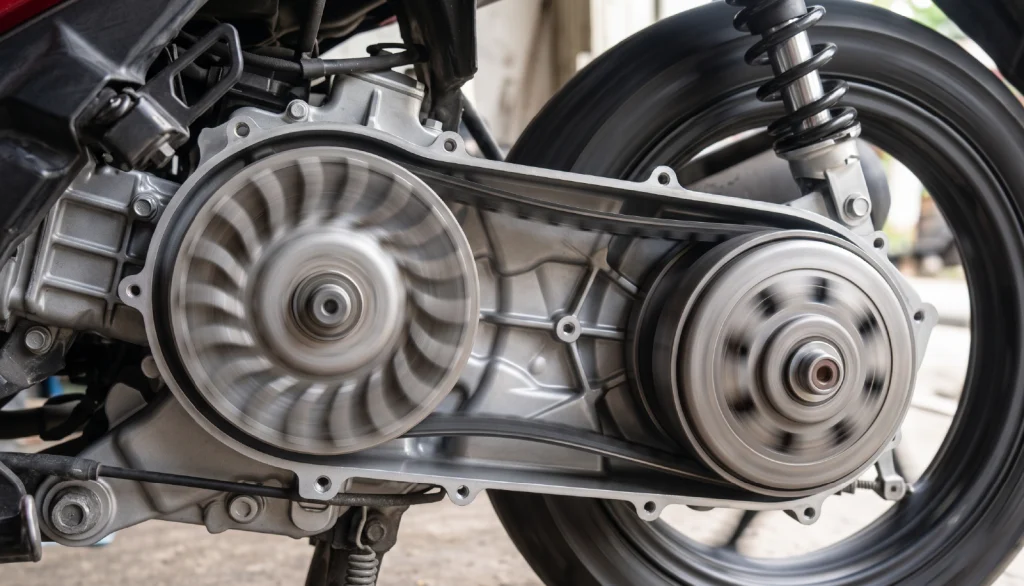
To understand how it works, the operation of the weight roller can be explained through several simple stages:
- The Engine Generates Rotation
Engine rotation is transferred to the primary pulley mechanism. - Engine Speed Increases
Centrifugal force acts on the weight rollers, causing them to move along their designated tracks. - The Weight Rollers Drive the Pulley Mechanism
The movement of the rollers helps push the movable part of the pulley. - The Pulley Position Changes
As the movable pulley component shifts, the working distance between the pulley surfaces changes. - The V-Belt Adjusts Its Position
Changes in pulley position cause the V-belt to move to a different operating position within the CVT system. - The Transmission Ratio Adjusts
As the V-belt changes position on the primary and secondary pulleys, the transmission ratio can adjust according to the vehicle’s operating conditions.
This entire process occurs mechanically and continuously in coordination with other CVT components.
The Importance of the Weight Roller in the CVT System
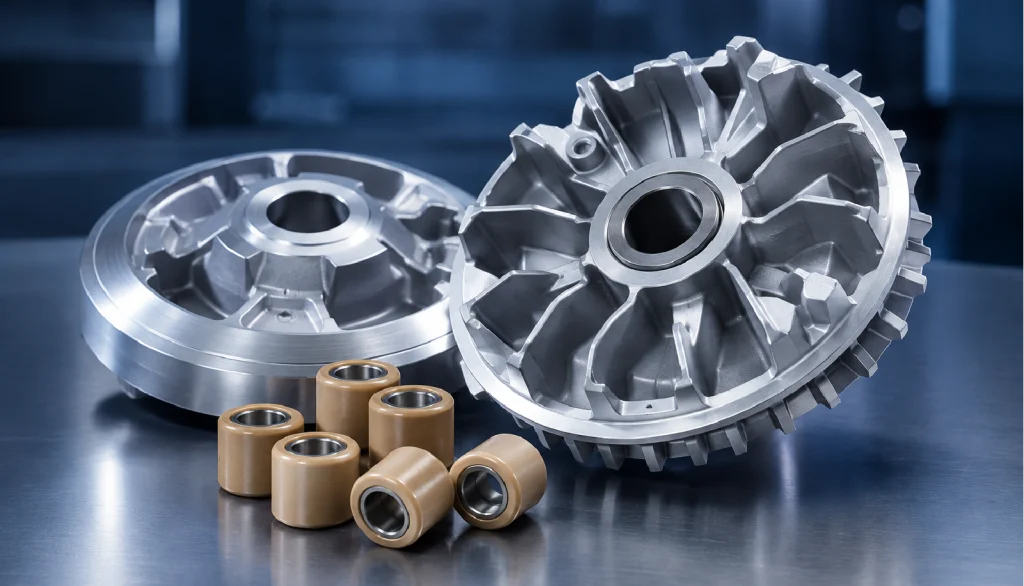
Simply put, the weight roller plays a role in changing the position of the primary pulley mechanism. Its key roles include:
- Supporting the movement of the primary pulley mechanism.
- Responding to changes in engine speed through centrifugal force.
- Supporting changes in the V-belt’s position.
- Supporting the CVT transmission ratio adjustment process.
- Forming part of the variator mechanism in automatic motorcycles.
Because the weight roller operates within a mechanism that moves continuously while the motorcycle is in use, its condition should be considered during CVT inspections.
Tips for Choosing a CVT Weight Roller
Before replacing a weight roller, consider the following:
- Make sure the component matches the vehicle’s specifications.
- Check the physical condition of the product before installation.
- Do not choose a spare part based on price alone.
- Make sure the product information can be verified.
- Consult a technician if you are unsure about the required specifications.
- Ensure that the component is installed correctly.
The weight roller plays a role in supporting movement within the primary pulley mechanism as engine speed changes. Its movement is then related to the position of the V-belt and the transmission ratio adjustment process in the CVT system.
For this reason, the condition of the weight roller is one of the aspects that should be considered during CVT inspections.
Understanding the function of each component can help make maintenance decisions more informed, particularly because CVT operation involves multiple components that work together.